Author: admin

  • Swabhawa – True nature of things

    Swabhawa – True nature of things

    During adversity, a person’s true nature (Swa- self, bhaava- essence) gets exposed. In normalcy, many of us take on covering to fool others and sometimes ourselves. We take on roles to fit into what we believe is expected from us to be accepted as a member of the society around us. The current pandemic is acting as a cleaver, slicing the outer false shell and exposing the inner true nature.

    Some of us are hoarding food and other essentials in quantities far beyond our wildest imagined needs. From toilet paper and canned meat to protective masks, vast quantities of materials have disappeared from stores as well as online retailers. Some people have hoarded medicines like hydroxychloroquine due to unsubstantiated statements of its ability to cure Covid-19 infections, at the cost of causing shortage to people who really need it for their immunological disorders. Some of these hoarders have become black marketeers. There are others who have built a virtual moat and stockage system around them, with stockpiles of essentials hoping to survive the pandemic by complete isolation, binging on streaming online entertainment, oblivious to the suffering around them.

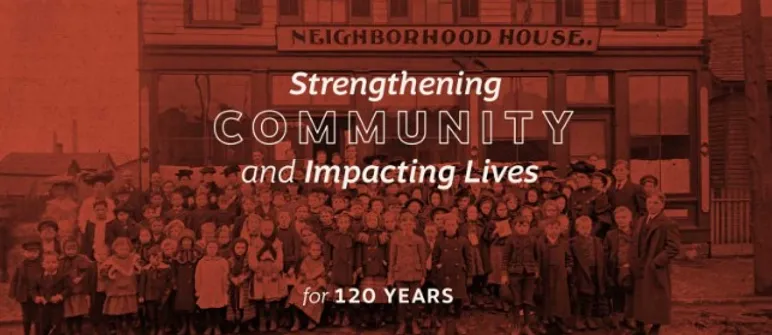
    At the same time, there are others who have seen the distress around them, and their true divinity gets manifest. These are the so called ‘ordinary’ people who become extraordinary. When disaster strikes, they blossom into true heroes. A few weeks ago, my youngest daughter and I had gone to Neighborhood House, a local charity in Peoria (nhpeoria.org), a life-line to many of Peoria’s most vulnerable population, to volunteer for making long shelf life food packages and delivering food to the elderly. On the delivery day, we arrived 5 minutes before the scheduled time. To our surprise, the whole parking lot was filled with volunteers, and in a few minutes all the deliveries were assigned. I was truly humbled by the spirit of service in Peoria.

    My first-hand knowledge is somewhat limited to my organization Hindu Swayamsevak Sangh, USA and its sister organization Sewa International (sewausa.org) who have established help lines covering all the time zones of the country. Requests ranging from home bound elders for grocery delivery, hospitals requesting cloth masks, stranded travelers, immigration help to spousal abuse and emotional/mental support are being handled by the help lines. Feeding the homeless and supporting food banks by conducting food drives are being done. At some places fundraising is being done to order food from local restaurants for the charity free food organizations, so that the local restaurant owners will earn money since their restaurants are closed to public, and the hungry will get food, thereby achieving two good activities in one stroke.

    The medical community starting from the front door greeters/security personnel to the EMT to the doctors and nurses are the brave hearts, holding back the Tsunami of the pandemic, and hopefully soon overturning it. Fortunately, for us in central Illinois, the rampage of the virus is limited compared to New York and Louisiana. Some local children are sending thank you posters to the hospitals. Drawing these pictures of gratitude will encourage our heroes and also ingrain into the children the examples of service before self.

    In Hindu Dharma, God manifests on earth (Avatar) when the balance of good and evil tilts too much in the favor of evil, and God rectifies the situation by annihilating the evil. One particular form of Avatar is called ‘Aveshavatar,’ where for a brief time God manifests special powers through an individual soul and acts through that person. I sincerely believe that each of the people who are helping others whether for an instant or by giving up their life while fighting for humanity are manifesting Aveshavatars channeling the divine force through their thoughts and acts. Lets all close our eyes for a few minutes and listen to our individual divine, manifesting through ourselves or through a prophet/philosopher, and do more than we are already doing.

  • Charity

    Charity

    There is a story of a famous poet Māgha in the 6th century, who was carefree with his wealth and lived in poverty towards the end of his life. One day, a poor man came to his door asking for some money so that he could get his daughter married. Māgha saw that his sleeping wife was wearing two gold bangles. He quietly slipped off one of them from her wrist and donated it to the visitor. When his wife woke up, he hesitatingly told her why he had taken her bangle. His wife admonished him, “How can a father get his daughter married with just one gold bangle. Please take off my other gold bangle and give it to him!”

    Hindu literature is filled with anecdotes of ordinary people performing extraordinary charitable acts without giving it much thought. This originates from the understanding of shared Divinity among all life forms resulting in a feeling of oneness, so that helping someone is like a person’s hand feeding his own mouth. For simple understanding of the process of charity, the Hindu scripture, Bhagawad Gita (17.20-22), states three categories of giving.

    1)A gift that is given without any expectation of benefit or reward is greatly beneficial to both the giver and recipient.

    (2) A gift that is given with the expectation of some advantage is of lower value.

    (3) A gift that is given at the wrong place and at the wrong time, causing embarrassment to the recipient, is harmful to both the giver and recipient.

    Charity essentially is a gift of useful time and resources. Nowadays, it is easier for many people to give under category 2, with the most common expectation being name recognition and advertisement of their economic success. Although we should all strive for the category 1, my personal opinion is that display of wealth is not always bad depending on how you do it. I have been a beneficiary of ‘display of wealth.’ I have received treatment at a hospital which carried the name of the famous Tata family in Mumbai. I used a library which was named after a benefactor who bestowed a large sum on the charitable trust. I have played in a park constructed on a piece of land donated and named after an industrialist. Having donated a large sum of money to a charitable cause indicates that you are wealthy. Of course, I do understand that the above gifts to the public by the generous benefactors were for the betterment of the masses, not just display of wealth. But is it not a great way to let everybody know that you have made it by donating to worthy causes? My suggestion to people who want to display their wealth is to donate more. A name on a plaque on a wall of charitable organization or emblazoned on a hospital or school lasts longer than a latest model expensive car. Further, more people can see it. This display is more glaring than a rare timepiece or jewelry. A hot meal consumed by a hungry person is nutritious regardless of the intention of the donor. Educational material donated to an underserved area organization gives the same quality of knowledge and career boost to children regardless of the selfish reasons of the donor.

    Sense of charity is like a skill. For some it comes naturally. For others, there is a steep learning curve. Small steps till we are comfortable, then one fine day we soar. Initially, perform charitable acts for prestige, self-aggrandization, or display of wealth. When you experience the joy of alleviating the misery of a fellow life form, slowly it transforms you. The hubris of self-importance starts getting washed away by the realization of oneness of giver and receiver, and ultimately oneness of the creation.

    ‘Giving without expectation’ is an epitome of perfection which we should all try to achieve. But just because a rooster cannot fly as majestically like an eagle, it does not stop trying. Some fortunate beings are born eagles, but for many of us, doing small acts of charity will be the building blocks which one day will result into our metamorphosis into a truly selfless charitable being.

    Featured image credit: Lalesh Aldarwish