Author: admin

  • The Hindu 300 (not the Spartans) — Battle of Paavan Khind

    The Hindu 300 (not the Spartans) — Battle of Paavan Khind

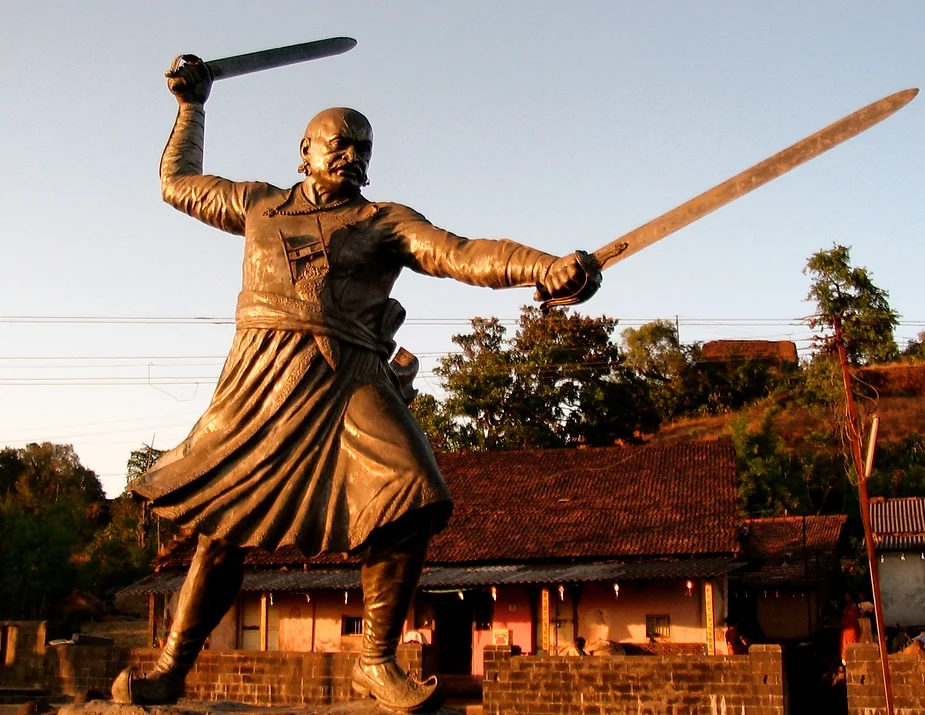
    There are times when the future of an entire dream of independence of an oppressed people rested on the mettle and sacrifice of few people. Few are fortunate to offer themselves as Ahuti (sacrificial offering) in these rare auspicious times in the yajna (sacrificial fire). One such momentous Ahuti was Baji Prabhu Deshpande (1615–1660) and his group of 300 Mavle soldiers.

    In the 17th century, then-contemporary India was ruled by foreign Muslim rulers who subjected the local Hindu populace to great atrocities and coerced conversion practices using brutal force and money. .Massive destruction of Hindu temples took place during these times, and mass conversion occurred of Hindus to Islam. Like a beam of light piercing these dark times was born King Shivaji, a son of local Chieftain whose intellect, cunning, and noble character inspired men of all faiths and varied strata of society to come together under the swallow-tailed Bhagwa flag (saffron flag) which represented the flames of sidewards turned sacrificial fire, and successfully resist the onslaught of foreign subjugation. His inspiration attracted extraordinary men or maybe turned ordinary men into extraordinary, who sacrificed everything for the noble cause.

    One of these extraordinary men was Baji Prabhu Deshpande. Baji was initially employed by a small-time enemy chieftain, who King Shivaji defeated. Shivaji was greatly impressed by this man’s valor and explained to him his life’s mission of freedom for the people from the oppressive foreign rulers, persuading Baji Prabhu to join his army. Baji Prabhu devoted himself to the common cause of Swarajya (self-rule). In 1660, Shivaji was trapped in the mountain Fort of Panhala by the Abyssinian general, Siddi Johar, who worked for Adil Shahi, the ruler of Persian origin in southern India. Multiple attempts by Shivaji’s men were made to break the four-month-long siege of the fort but did not succeed. As rations were getting exhausted, a daring plan was hatched to leave the fort from a hidden exit at night, breach the encirclement and escape from Fort Panhala to Fort Vishalgad, at a distance of 65 km. Fort Vishalgad was also surrounded by the enemy’s army but was the closest secure stronghold. The journey took 20 hours by foot over mountains and valleys. Shivaji’s look-alike servant Shiva Kashid dressed up as Shivaji and got down from the Fort with few soldiers, and fled in the direction opposite of Fort Vishalgad, knowing very well that they will be captured and put to death after being recognized. However, this sacrifice and the resultant distraction and disarray allowed Shivaji, Baji Prabhu, and 600 of their men to escape in the opposite direction towards Vishalgad, after fighting and breaking through the ring of encirclement.

    It was a full moon night of July 13th, 1660, with torrential rain, as Shivaji and the soldiers hurried on the mountainous rock-striven path, crossing flooded streams. The party hurried, knowing that they were only a few hours ahead of the enemy. Siddhi Johar realized that he had been fooled by the look-alike decoy and sent his son-in-law Siddi Masud with a vast army of close to ten-thousand soldiers chasing after Shivaji in the direction of Vishalgad. Baji Prabhu saw the flickering light of the torches of Siddi Masud’s army following them, who were gaining on them, being freshly rested while Shivaji’s men were tired from fighting while breaking the encirclement. As they approached Ghodkhind (Ghod-horse, Khind-mountainous pass) a very narrow pass through the mountains about 10 km from their destination, which was the only way to Fort Vishalgad, Baji Prabhu said to Shivaji, “Please take half of the people with you and continue towards Vishalgad, while myself and 300 others will hold back the enemy till you reach safety”. The 300 men with Shivaji were needed to attempt and break the siege of Fort Vishalgad and enter it. Shivaji could see from the number of flickering torches that the chasing army was in thousands and refused to let Baji stay behind. Baji realizing that if Shivaji was killed or captured, the dream of independence would be shattered. He uttered the famous sentence, “Even if hundred thousand die, the savior of a hundred thousand should be saved.” He begged Shivaji to go to Fort Vishalgad and continue with the dream of establishing Swarajya (self-rule) for all the people of the land. Baji requested Shivaji to fire 5 cannon shots, indicating that he had reached the safety of Vishalgad. With a heavy heart, Shivaji departed knowing the fate of these soldiers. Baji Prabhu arranged his soldiers along the extremely narrow path, which was the only way through which the enemy could follow Shivaji. With 50 people flanking the pass and multiple rows of men extending from the wider entrance leading to the narrowest portion, he positioned himself with dand pattas (gauntlet swords) in each hand. Shivaji’s soldiers were the Mavles, who were mostly agriculturists, many of them part-time farmers/soldiers, having families back in the villages. I cannot imagine what must be going through their mind as they faced the onslaught of professional soldiers from the Adil Shahi army, fully aware that they will not be returning to their families and farms. The Siddhis were Abyssinian soldiers. Many brought as slaves but given military ranks after proving their skills. The fact that they rose to such prominence in Adil Shah’s army indicated the fearsomeness of the Siddhis. With the huge mismatch in numbers, facing such an enemy gives us a glimpse of dedication to the cause of freedom. Baji Prabhu and his men held the pass for 11–12 hours. By the time the next afternoon arrived, only 40–50 of the original 300 were left. Baji Prabhu was grievously injured, but no enemy soldier could pass him and his fearsome skill at dand patta. Siddhi Masud observed Baji from the nearby hillock and summoned an Englishman accompanying his troops with a long musket gun. He ordered the Englishman to shoot Baji, as that was the only way anybody could get past him. It is said that the Englishman was looking for an area on his body to shoot so that he would know he hit his target, but Baji’s body was so covered in wounds that there was no clear area on his chest or head.

    The long gun musket shot Baji in the chest, and he collapsed. As the surrounding soldiers tried to drag him to safety and cover, Baji said, “I cannot let a single enemy pass through, till I hear Shivaji has reached safety. Death has to wait till the king has reached safety.” Baji knew that Shivaji had to fight the encirclement surrounding Vishalgad, before entering the fort and reaching safety. Baji stood up and again walked to the narrow pass and continued fighting. Suddenly, the cannon fires started in the distance. As the fifth cannon shot was heard, Baji collapsed and closed his eyes, smiling. The blood of Baji and 300 heroes consecrated the soil of Ghodkhind, which from that day onwards has been renamed as Paavan Khind (Sacred Pass).

    A forty-five-year-old man fighting for 11–12 hours after walking overnight indicates the strength, stamina, and devotion of Baji Prabhu to the cause of freedom and self-rule. . The sacrifice of the other 300 unknown soldiers most likely unknown to even their own descendants is profound. These ordinary soldiers surrounded and supported great heroes and individually did not get accolades or glory just like the particles of mortar holding together great rocks that form the citadel of freedom that protects us.

  • Swabhawa – True nature of things

    Swabhawa – True nature of things

    During adversity, a person’s true nature (Swa- self, bhaava- essence) gets exposed. In normalcy, many of us take on covering to fool others and sometimes ourselves. We take on roles to fit into what we believe is expected from us to be accepted as a member of the society around us. The current pandemic is acting as a cleaver, slicing the outer false shell and exposing the inner true nature.

    Some of us are hoarding food and other essentials in quantities far beyond our wildest imagined needs. From toilet paper and canned meat to protective masks, vast quantities of materials have disappeared from stores as well as online retailers. Some people have hoarded medicines like hydroxychloroquine due to unsubstantiated statements of its ability to cure Covid-19 infections, at the cost of causing shortage to people who really need it for their immunological disorders. Some of these hoarders have become black marketeers. There are others who have built a virtual moat and stockage system around them, with stockpiles of essentials hoping to survive the pandemic by complete isolation, binging on streaming online entertainment, oblivious to the suffering around them.

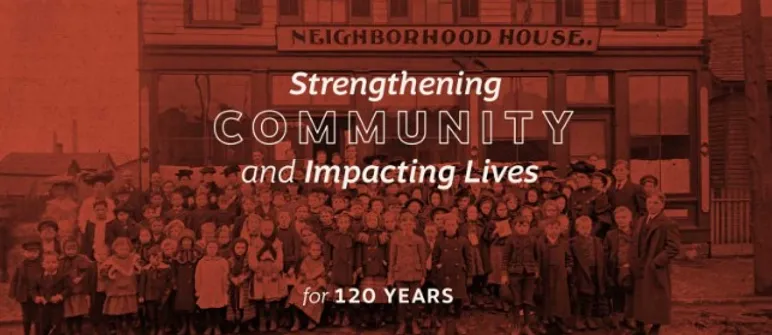
    At the same time, there are others who have seen the distress around them, and their true divinity gets manifest. These are the so called ‘ordinary’ people who become extraordinary. When disaster strikes, they blossom into true heroes. A few weeks ago, my youngest daughter and I had gone to Neighborhood House, a local charity in Peoria (nhpeoria.org), a life-line to many of Peoria’s most vulnerable population, to volunteer for making long shelf life food packages and delivering food to the elderly. On the delivery day, we arrived 5 minutes before the scheduled time. To our surprise, the whole parking lot was filled with volunteers, and in a few minutes all the deliveries were assigned. I was truly humbled by the spirit of service in Peoria.

    My first-hand knowledge is somewhat limited to my organization Hindu Swayamsevak Sangh, USA and its sister organization Sewa International (sewausa.org) who have established help lines covering all the time zones of the country. Requests ranging from home bound elders for grocery delivery, hospitals requesting cloth masks, stranded travelers, immigration help to spousal abuse and emotional/mental support are being handled by the help lines. Feeding the homeless and supporting food banks by conducting food drives are being done. At some places fundraising is being done to order food from local restaurants for the charity free food organizations, so that the local restaurant owners will earn money since their restaurants are closed to public, and the hungry will get food, thereby achieving two good activities in one stroke.

    The medical community starting from the front door greeters/security personnel to the EMT to the doctors and nurses are the brave hearts, holding back the Tsunami of the pandemic, and hopefully soon overturning it. Fortunately, for us in central Illinois, the rampage of the virus is limited compared to New York and Louisiana. Some local children are sending thank you posters to the hospitals. Drawing these pictures of gratitude will encourage our heroes and also ingrain into the children the examples of service before self.

    In Hindu Dharma, God manifests on earth (Avatar) when the balance of good and evil tilts too much in the favor of evil, and God rectifies the situation by annihilating the evil. One particular form of Avatar is called ‘Aveshavatar,’ where for a brief time God manifests special powers through an individual soul and acts through that person. I sincerely believe that each of the people who are helping others whether for an instant or by giving up their life while fighting for humanity are manifesting Aveshavatars channeling the divine force through their thoughts and acts. Lets all close our eyes for a few minutes and listen to our individual divine, manifesting through ourselves or through a prophet/philosopher, and do more than we are already doing.

  • Charity

    Charity

    There is a story of a famous poet Māgha in the 6th century, who was carefree with his wealth and lived in poverty towards the end of his life. One day, a poor man came to his door asking for some money so that he could get his daughter married. Māgha saw that his sleeping wife was wearing two gold bangles. He quietly slipped off one of them from her wrist and donated it to the visitor. When his wife woke up, he hesitatingly told her why he had taken her bangle. His wife admonished him, “How can a father get his daughter married with just one gold bangle. Please take off my other gold bangle and give it to him!”

    Hindu literature is filled with anecdotes of ordinary people performing extraordinary charitable acts without giving it much thought. This originates from the understanding of shared Divinity among all life forms resulting in a feeling of oneness, so that helping someone is like a person’s hand feeding his own mouth. For simple understanding of the process of charity, the Hindu scripture, Bhagawad Gita (17.20-22), states three categories of giving.

    1)A gift that is given without any expectation of benefit or reward is greatly beneficial to both the giver and recipient.

    (2) A gift that is given with the expectation of some advantage is of lower value.

    (3) A gift that is given at the wrong place and at the wrong time, causing embarrassment to the recipient, is harmful to both the giver and recipient.

    Charity essentially is a gift of useful time and resources. Nowadays, it is easier for many people to give under category 2, with the most common expectation being name recognition and advertisement of their economic success. Although we should all strive for the category 1, my personal opinion is that display of wealth is not always bad depending on how you do it. I have been a beneficiary of ‘display of wealth.’ I have received treatment at a hospital which carried the name of the famous Tata family in Mumbai. I used a library which was named after a benefactor who bestowed a large sum on the charitable trust. I have played in a park constructed on a piece of land donated and named after an industrialist. Having donated a large sum of money to a charitable cause indicates that you are wealthy. Of course, I do understand that the above gifts to the public by the generous benefactors were for the betterment of the masses, not just display of wealth. But is it not a great way to let everybody know that you have made it by donating to worthy causes? My suggestion to people who want to display their wealth is to donate more. A name on a plaque on a wall of charitable organization or emblazoned on a hospital or school lasts longer than a latest model expensive car. Further, more people can see it. This display is more glaring than a rare timepiece or jewelry. A hot meal consumed by a hungry person is nutritious regardless of the intention of the donor. Educational material donated to an underserved area organization gives the same quality of knowledge and career boost to children regardless of the selfish reasons of the donor.

    Sense of charity is like a skill. For some it comes naturally. For others, there is a steep learning curve. Small steps till we are comfortable, then one fine day we soar. Initially, perform charitable acts for prestige, self-aggrandization, or display of wealth. When you experience the joy of alleviating the misery of a fellow life form, slowly it transforms you. The hubris of self-importance starts getting washed away by the realization of oneness of giver and receiver, and ultimately oneness of the creation.

    ‘Giving without expectation’ is an epitome of perfection which we should all try to achieve. But just because a rooster cannot fly as majestically like an eagle, it does not stop trying. Some fortunate beings are born eagles, but for many of us, doing small acts of charity will be the building blocks which one day will result into our metamorphosis into a truly selfless charitable being.

    Featured image credit: Lalesh Aldarwish