On March 11, 2024, the Union home ministry of India has operationalized the Citizenship (Amendment Act (CAA) which was passed by the India’s Parliament on December 11th 2019. The Act ignited a firestorm of controversy both domestically and internationally due to extensive misrepresentation by the liberal media, fueling misconceptions and protests. The legislation which aims to expedite the citizenship process for persecuted minorities from neighboring countries, including Hindus, Sikhs, Buddhists, Jains, Parsis, and Christians, who had fled to India before 2015 due to religious persecution. Unfortunately, misleading sensationalized headings like ‘India moves to implement controversial citizenship bill that excludes Muslims’ on CNN and ‘Citizenship Amendment Bill: India’s new ‘anti-Muslim’ law explained’ on BBC has confused and agitated well-meaning concerned people all over the world.
The CAA’s core objective is to provide refuge to religious minorities facing persecution in Islamic neighbors of India namely Afghanistan, Bangladesh, and Pakistan. These communities have often faced severe discrimination and violence, compelling them to seek sanctuary in India, a secular democracy known for its pluralistic ethos. Contrary to popular misconception, the CAA does not seek to strip anyone of their citizenship rights nor affect Indian Muslims in any way. It merely offers expedited citizenship to those who have faced religious persecution and sought refuge in India.
Critics, however, have portrayed the CAA as discriminatory and unconstitutional, alleging that it violates the secular fabric of India’s constitution by favoring specific religious groups. While these concerns are fallacious and lack the essential understanding of the historical context and the humanitarian aspect of the legislation. The CAA addresses the plight of minorities who have faced systematic persecution in neighboring Islamic nations, often with scant attention from the international community. By offering them a pathway to citizenship, India upholds its commitment to providing shelter to those in need while also safeguarding its national security interests. The CAA reflects a delicate balance between humanitarian concerns and national security interests, rather than a manifestation of religious bigotry.
Another misrepresented matter is the National Register of Citizens (NRC). The NRC, initially implemented in the northeastern state of Assam to identify illegal immigrants, aims to weed out infiltrators irrespective of their religion. Therefore, the narrative that the CAA discriminates against Muslims in the context of the NRC is misleading. The CAA’s provisions are separate from the NRC . They offer relief to persecuted minorities regardless of their nationality.
Despite these clarifications, some malicious elements in the media has persistently misrepresented the CAA, painting it as a tool of religious discrimination orchestrated by the ‘Hindu nationalist government’. Such sensationalized narratives often overlook the humanitarian aspect of the legislation and perpetuate a polarizing discourse that undermines constructive dialogue. The demonization of the CAA overlooks the fact that it aligns with India’s long-standing tradition of sheltering persecuted communities, regardless of their faith. Over last thousand years or more, India has provided refuge to persecuted masses like the Zoroastrians (since the 8th century), Jews (first in 562 BC, and then 70 AD), to Tibetan refugees who arrived in 1959, Chakma refugees from present day Bangladesh in early 1960s and Afghan refugees since the Afghan-Soviet war.
The portrayal of protests against the CAA as a grassroots movement for secularism often masquerades the political motivations driving certain factions. While many protestors genuinely advocate for secularism and inclusive citizenship, there are elements within the opposition exploiting the issue for political gains. The partisan media’s failure to provide nuanced coverage of these complexities further exacerbates the polarization surrounding the CAA.
The international criticism of the CAA often stems from a lack of understanding of India’s socio-political dynamics and the complexities of its relationship with its neighbors. Any concern about religious discrimination must be contextualized within the broader framework of India’s historical and geopolitical realities. India’s commitment to secularism and pluralism should not be discounted based on sensationalized narratives propagated by the liberal media.
In conclusion, the Citizenship Amendment Act represents a nuanced attempt to address the humanitarian needs of persecuted minorities while upholding India’s national security interests. The irresponsible media’s misrepresentation of the CAA has fueled misconceptions and polarized discourse, thereby undermining constructive dialogue on a complex issue. To foster a more informed and inclusive discussion, it’s imperative to debunk sensationalized narratives and engage with the CAA’s provisions within their broader socio-political context.
Within this year, we observe the 350th anniversary of Chhatrapati Shivaji Maharaj’s coronation, a defining moment in the history of India, alongside the 240th anniversary of the Treaty of Paris, a monumental conclusion to the Revolutionary War in the United States.
The year 2023 stands as a significant milestone, commemorating the convergence of two iconic historical events separated by a mere hundred years. These pivotal occurrences gave hope to oppressed people globally, as a small group of resolute and unorganized men defiantly cast aside the shackles of enslavement. Within this year, we observe the 350th anniversary of Chhatrapati Shivaji Maharaj’s coronation, a defining moment in the history of India, alongside the 240th anniversary of the Treaty of Paris, a monumental conclusion to the Revolutionary War in the United States.
Both of these transformative landmarks of time were spearheaded by exceptional men, namely George Washington and Chhatrapati Shivaji Maharaj, who intriguingly share striking parallels. Despite living on different continents and being born in a very different culture, these two remarkable individuals shared striking similarities in their leadership qualities, strategic prowess, and unwavering commitment to freedom and justice. In this article, I have attempted to shed light on their common attributes that have transcended time and space. Shivaji Maharaj, born in 1630 in present-day Maharashtra, India, dreamed of overthrowing the yoke of foreign rulers (Mughal Empire and Adil Shahi Sultanate) and establishing a Kingdom that would safeguard the rights and interests of his subjects. Similarly, George Washington, born in 1732 in the British American colonies, envisioned a sovereign and self-governing nation that would secure the liberties of its citizens. Both leaders, driven by a profound sense of nationalism and working tirelessly to translate their visions into reality, have secured an everlasting place in the hearts and minds of their countrymen.
Inclusiveness
Both George Washington and Shivaji Maharaj had the ability to build and cultivate trust, bring together people of different backgrounds and perspectives, and make the most of the surrounding talent. Many great personalities of that time like Benjamin Franklin, Thomas Jefferson, Patrick Henry, and John Adams could not get along with each other but under the leadership of Washington, they worked together to get the colossal project of American Independence completed. Similarly, Shivaji was able to develop great lieutenants of different socioeconomic and religious backgrounds like Baji Prabhu Deshpande, Tanaji Malusare, Jiva Mahale, Bahirji Naik, Siddhi Ibrahim, among others. Both Washington and Shivaji Maharaj made sure that everybody’s attention was constantly fixed on the ultimate aim of freedom and not on any personal gains.
Inspiring Leadership
Both leaders were renowned for their ability to inspire and galvanize their followers. Shivaji Maharaj and George Washington commanded unwavering loyalty from their troops through their exemplary leadership styles. They led by example, displaying courage, integrity, and resilience even in the face of adversity. Their charisma and unwavering commitment to their respective causes ignited a sense of purpose and determination among their followers, motivating them to fight for freedom and justice. At the Battle of Princeton, Washington led his soldiers from the front on his horseback. He was only thirty meters away from the British line of fire. During his Presidency, even at the risk of becoming unpopular, Washington suppressed the Whiskey Rebellion, to establish that the government was willing to suppress violent protests of the laws. Among his many examples of supporting justice over political expediency, a prominent one stands when Shivaji severely punished his own victorious general Sakuji Gaikwad who raped the defeated woman leader of the opposing enemy army. Washington’s leadership was marked by his calm and composed demeanor, his ability to instill discipline, and his unwavering commitment to the cause of freedom. Shivaji maintained his calm in the most demanding situations, even when forced to keep his elder son, Sambhaji, at age nine as a surety for the treaty with Mughal general Mirza Raje Jaisingh. Both leaders demonstrated a strong sense of duty and were willing to sacrifice their personal and family lives for the greater good of their nations.
Military Strategies
Shivaji and Washington were military geniuses who employed unconventional tactics to outwit their more powerful adversaries. Shivaji revolutionized guerrilla warfare tactics in the 17th century, utilizing the rugged terrain of the Sahyadri mountains to his advantage and employing lightning-fast cavalry attacks known as “ganimi kava” (guerilla warfare) to destabilize the mighty Mughal Empire. Likewise, Washington’s brilliance as a military strategist was evident during the American Revolutionary War. He skillfully utilized asymmetrical warfare, hit-and-run tactics, and his knowledge of the local terrain to outmaneuver the powerful British forces. Both leaders understood the importance of adaptability, surprise, and exploiting the weaknesses of their opponents. They took help from enemies of the enemy. In 1677, Shivaji Maharaj signed a military alliance with Kutub Shahi Ruler Abul Hasan Tanashah of Golconda against the Mughal emperor Aurangzeb. The American Colonies and France signed this military treaty on February 6th, 1778, which shifted the balance of the Revolutionary War in America’s balance.
Governance and Administration
Shivaji Maharaj and George Washington were not just military leaders; they were also adept administrators. Shivaji Maharaj established a robust administrative system in his kingdom, focusing on justice, welfare, and effective governance. He implemented policies that protected the rights of his subjects and encouraged economic growth. In administration matters, he gave superior positions to his civil officers than to military officers.
Similarly, George Washington played a pivotal role in shaping the governance structure of the United States, contributing to the development of a democratic framework that emphasized individual liberties and the rule of law. He regarded himself as standing aloof from party divisions and emphasized his position as president of the entire country. He meticulously enquired into all the problems facing the new nation and laid the groundwork for his judicious recommendations to Congress.
Within this year, we observe the 350th anniversary of Chhatrapati Shivaji Maharaj’s coronation, a defining moment in the history of India, alongside the 240th anniversary of the Treaty of Paris, a monumental conclusion to the Revolutionary War in the United States.
Vision for their Nations
Shivaji and Washington shared a common vision of creating independent nations that would be governed by principles of justice, liberty, and self-governance. Shivaji dreamt of establishing the ‘Swarajya’ (Land of Self-rule), a realm free from foreign domination, where the rights of all the people would be safeguarded regardless of their religious beliefs. ‘Adnyapatra’, a royal edict on the principles of Shivaji’s policy written by Ramchandra Pant Amatya, who was the Finance Minister of Shivaji, is the formal documentation of his ideals, principles, and policies of state administration. Similarly, Washington envisioned a united and independent United States, where individual liberties and democratic principles would flourish. Both leaders were committed to protecting the rights of their people and providing them with opportunities for social and economic growth. In the summer of 1783, as he was retiring, George Washington sent a letter which was published as a ‘Circular to the States’ outlining his vision for America. It stressed a peaceful and affectionate relationship between all citizens of the United States, regardless of religion. He noted that the Union required all people “to forget their local prejudices and policies” and be willing “to sacrifice their individual advantages to the interest of the Community.”
The legacies of Shivaji Maharaj and George Washington continue to inspire generations. George Washington’s ideals of liberty, democracy, and constitutional governance shaped the foundation of the United States and influenced the course of world history. His belief in the principles of freedom and governance by the people became the cornerstone of the American nation. Similarly, Shivaji Maharaj’s principles of self-rule, social equality, and religious tolerance left an indelible mark on Indian history, serving as a guiding light for future leaders. His establishment of Swarajya laid the foundation for a powerful and prosperous Maratha Empire.
Future leaders of all countries should take inspiration and knowledge from these two great leaders to help better the administration of their own countries.
The announcement that the intersection of 61st Street and Broadway in Queens, New York, has been officially designated as Dr. Babasaheb Ambedkar Way filled me with an overwhelming sense of joy and immense pride. Despite being born into a marginalized community in colonial India and facing discrimination and social exclusion throughout his life, Dr. Ambedkar rose to become an advocate for the rights of the oppressed, particularly those categorized as belonging to the Scheduled Caste, who are India’s most socio-economically disadvantaged people. His relentless struggle against the caste system and his role in drafting the Indian Constitution have cemented his legacy as the architect of social justice in India.
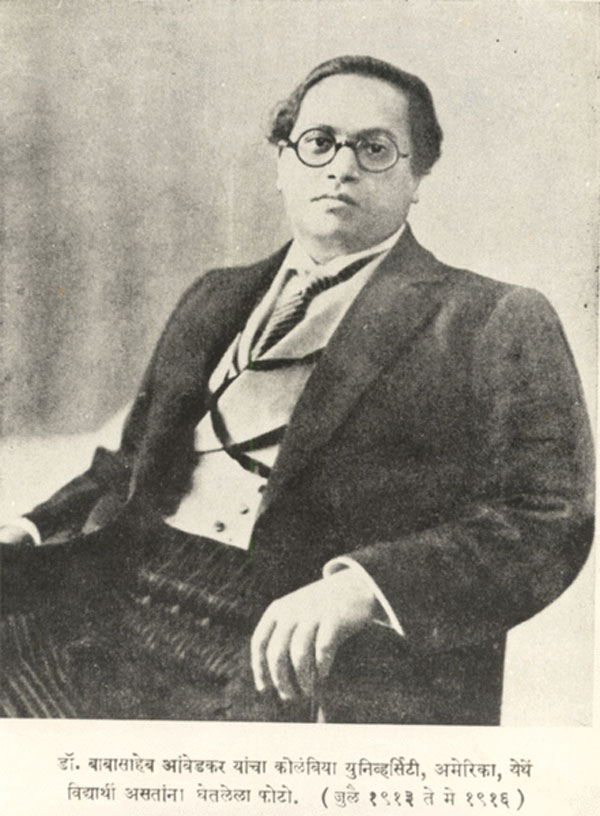
Babasaheb arrived in New York in July of 1913 to join the Political Science Department of Columbia University as a Post Graduate Student. He had passed the B.A. Examination in Economics and Politics from Bombay University, after which he was awarded a scholarship of 11.50 British pounds a month, for three years, by Maharaja Sayajirao Gaekwad of Baroda, through the efforts of Babasaheb’s teacher Krishnaji Arjun Keluskar. Using these funds, he spent three years in the United States. Having a road named after him in the country, which had a paramount role in framing his worldview, is an appropriate tribute to him. Similarly, every American activist who aspires to achieve equal rights and opportunities should study Dr. Babasaheb Ambedkar’s balanced, nuanced, and patriotic approach to achieving social justice.
This article is my attempt to explore the applicability of Ambedkar’s method to achieve social justice in present-day America.
Education as the Foundation for Empowerment
Ambedkar recognized the significance of education in dismantling social inequalities. Ambedkar’s approach emphasizes the need to provide equal access to quality education, irrespective of socioeconomic background or race. In America, efforts should be made to bridge the education gap, enhance educational infrastructure in underprivileged areas, and ensure that all students receive an education that equips them with the skills necessary to succeed. In addition to legislation, a grassroots person-to-person volunteering effort in underprivileged schools by Americans from outside the deprived areas will have tremendous results. The profound impact on children’s psyche, resulting from the subconscious recognition that someone from a different background is dedicated to investing their time and effort into uplifting their future, is immeasurable.
Affirmative Action and Reservation Policies
Ambedkar strongly advocated affirmative action policies and reservations to address historical injustices marginalized communities face. The recent Supreme Court decision to end race-based preferences for admissions at educational institutes but leave preferences intact for athletes, people related to faculty, alums, and major donors, highlights the constant uphill struggle faced by the underprivileged. Barriers due to implicit and explicit biases are fairly common if consciously observed. In post-affirmative action America, other programs should be formulated and implemented to enable the underprivileged to break free from the cycle of poverty and marginalization.
Legal Reforms and Protection of Rights
Ambedkar played a pivotal role in drafting the Indian Constitution, which enshrines principles of equality, justice, and protection of individual rights. Similarly, the United States can learn from Ambedkar’s vision to strengthen legal frameworks that safeguard the rights of all citizens, particularly marginalized communities. The U.S. can strive towards a more just society by addressing discriminatory practices within the criminal justice system, like the cash bail system and mandatory minimum sentencing. They can ensure equal access to legal representation and reevaluate other policies like stop and search.
Empowering Grassroots Movements
Ambedkar’s struggle for social justice was driven by his belief in the power of grassroots movements. In the current U.S. context, social movements such as Black Lives Matter, LGBTQ+ rights advocacy, and women’s rights campaigns emphasize the interconnectedness of various forms of discrimination, similar to Dr. Ambedkar’s inclusive vision. Involvement in these movements of people from all strata of society, including the privileged class, is vital. This parallels Dr. Ambedkar accepting the help of supporters from the so-called upper castes to organize and sustain his mission. The long-term effect is an achievement of social harmony among all. By slowly eroding the barriers of preconceived perceptions, empowering and amplifying the voices of marginalized groups, encouraging civic participation, and fostering solidarity, the U.S. can progress toward a more inclusive society.
Eradicating Discrimination
Whether discrimination is based on race, ancestry, religion, or sex, it damages the entire nation, including both the oppressed and even the oppressors at some level. Applying Ambedkar’s method involves exposing the deep-rooted biases and airing the festering prejudices perpetuating discrimination in society. By consciously promoting awareness, education, and cultural exchange at a personal family level, the U.S. can work towards eliminating discriminatory practices and fostering harmony among diverse communities. Inviting families of classmates or colleagues from the marginalized community to your home for festivities will go a long way compared to pontificating on social harmony on social media.
Conclusion
Dr. Ambedkar’s method for achieving social justice through education, affirmative action, legal reforms, grassroots empowerment, and eradication of discrimination provides valuable insights for the contemporary United States. By embracing these principles, the U.S. can strive to create a society where opportunities are accessible, marginalized communities are empowered, and equality and justice prevail. Through collective effort, legislation, and a commitment to inclusivity, the United States can continue to evolve toward a more equitable future. Drawing inspiration from Ambedkar’s tireless fight for social justice in India, we Americans can continue to be motivated to persistently pursue the noble goal of equality and justice for all.
This year I will be completing three decades of residing in this country. Very early during my stay here, I pondered the question ‘Who am I?’ This was not the Upanishadic question but geopolitical identity. This introspection about one’s identity and the clash of values between cultures is common to all immigrants, sometimes causing inter-generational strife within families. In this article, I have explored the core values that define both cultures and discuss the potential for convergence.
American Values: The American ethos is founded upon the principles enshrined in the Declaration of Independence. While the concept of “Life, Liberty, and the pursuit of Happiness” forms the bedrock, let us delve deeper into how these values manifest in daily life.
1. Individualism: Americans celebrate individuality, acknowledging the uniqueness and significance of each person. The freedom of expression is cherished, allowing individuals to pursue their passions, advocate for their beliefs, and engage in unconventional forms of self-expression. Some students take time off from school to travel for pleasure or service. People stand on street corners with boards declaring their preferred causes. Pro-life people can protest right across women’s health clinics. People put placards in front of their houses supporting or decrying various causes. This ethos is exemplified by notable figures such as Atticus Finch from the book, “To Kill a Mockingbird,” who stood up for justice against societal norms.
2. Independence and Self-reliance: Self-reliance and personal freedom are highly prized in American society. From an early age, individuals are encouraged to take responsibility for their lives, pursue education, and establish independence. This emphasis on autonomy extends to various aspects, such as leaving the parental home, financing one’s education, and making independent life choices. Many do weddings with their own money. Similarly, the parents also can live their own life after the children have moved out of the house. Seniors live independently in their single-family homes or retirement homes. They can live with people their age and have activities that are fun for them. They are not dependent on their children. The families still support each other when there is a need, including getting together for important events.
3. Equality: American values are rooted in the principle that all individuals are created equal. This notion of equality permeates society, emphasizing equal treatment, opportunities, and legal rights for all. While the reality may fall short at times, there is a continuous push to address historical injustices and ensure equal treatment for marginalized groups.
4. Volunteerism and Charity: Americans are known for their philanthropy and willingness to help others. Charitable giving, even among those with limited means, is a testament to the spirit of compassion and generosity. Individuals from all walks of life engage in volunteer work, supporting causes and positively impacting their communities. I have seen children from extremely financially limited families donate their winter clothes towards winter coat drives at their school. A janitor in the school where we were conducting the Hindu Swayamsevak Sangh Annual subsidized book fair, donated $60 so that children in the school could buy books. He said, “Now that I am in a better financial situation, I want to help children get books, which were not accessible to me due to poverty in my childhood”. People from the lowest salary range do automatic deductions for charity.
5. Acceptance: American society embraces diversity and exhibits a remarkable capacity for acceptance. The adoption of children from different backgrounds, fostering care, and the ease with which individuals from varied races and cultures are integrated into families exemplify the inclusive nature of American values. Widowed and divorced people, even those with children, get remarried relatively easily with no social stigma.
6. Well-rounded Education: Education in the United States emphasizes holistic development, promoting not only academic excellence but also the exploration of artistic, athletic, and volunteering pursuits. American values recognize the importance of a comprehensive education that nurtures diverse talents and interests.
There are many other values like privacy, directness in speech, etc.
Indian Values: India with its deep-rooted philosophies and spiritual traditions, holds a distinct set of values that foster interconnectedness and collective well-being. Let us explore some prominent Indian values and their practical applications.
1. Satya (Truthfulness): Indian culture emphasizes the importance of truthfulness in our interactions with others and in our self-reflection. By aligning our thoughts, words, and actions with truth, we establish harmony within ourselves and with the world around us.
2. Brahmacharya (Self-control): Self-control over the senses and intelligent engagement with the world form the essence of Brahmacharya. This value encourages individuals to master their senses and maintain a balanced relationship with the external world, preventing impulsive reactions and fostering inner harmony.
3. Ahimsa (Non-violence): Ahimsa, the principle of non-violence, extends beyond refraining from physical harm. It encompasses compassion, love, and kindness towards all living beings, fostering a sense of interconnectedness and peaceful coexistence.
4. Duty and Sacrifice: Indian culture emphasizes the fulfillment of duties as a fundamental aspect of leading a righteous life. The concept of sacrificing personal desires for the betterment of the family and society underscores the importance of collective welfare over individual interests.
5. Spiritual Connectedness: Indian values instill a sense of spirituality in all aspects of life. Recognizing the divinity in every life form and the interconnectedness of all existence inspires reverence for nature, environmental conservation, and a holistic view of the world. The principle of milking nature not slaughtering it is ingrained in all Indians.
There are many other well-known values like the sanctity of books, the spiritual value of food, the exalted status of teachers (Guru), and hospitality to unannounced guests, etc.
The Americans of Indian origin who are born and raised in the USA have the unique opportunity to blend their ancestral inheritance of the universal Indian outlook with the modern American values they grow up with. Similarly, the immigrant Indians can realize that it is easier to practice their ancestral values in this country due to the relative life of ease, compared to the struggles for daily subsistence before they came here. They should also be appreciative of American values, given that those form the basis of the opportunity they have obtained to succeed in America.
Indian philosophies advocate that every being has divinity in it. Further, every lifeform is characterized by constant action at the gross or microcellular level. These actions can be volitional or preset by nature. As, human beings we have the ability to determine most of our actions. By assessing any volitional actions against the litmus test of the values and considering the question, “Would the divine me agree to do this?”, we can navigate potential conflicts and promote values that resonate with our inner selves. By striving for harmony between Indian and American values, we can contribute to the well-being of ourselves and those around us, fostering a society that cherishes diversity, embraces compassion, and promotes the greater good.
President Joe Biden and First Lady Jill Biden will host Prime Minister Narendra Modi of the Republic of India for an Official State Visit to the United States, which will include a state dinner, on June 22, 2023. The upcoming visit will affirm the deep and close partnership between the United States and India and the warm bonds of family and friendship that link Americans and Indians together.
The friendship between India and USA is a critical matter not just for World Peace but for all Indian Americans. For many of us Indian Americans, India is our ‘janma bhumi’, the land of our birth and upbringing. while America is our ‘karma bhumi’, the land which allowed us to enhance and grow our abilities to attend physical and financial success. Both are very dear to us, one giving rise to us and the other allowing us to rise.
When it comes to the relationship between India and the United States, the bond forged between these two nations goes beyond mere diplomatic ties. Rooted in shared values, democratic principles, and mutual respect, the friendship between India and the USA has grown steadily over the years, evolving into a strategic partnership that benefits both nations and influences global affairs. Long before any Swamiji from India came to the USA, one of America’s most influential and original thinkers, Ralph Waldo Emerson was subtly inserting the extracts of Hindu philosophy gems like the Vedas, Upanishads, Mahabharata, and Ramayana. into the tapestry of what became the quintessential American thought. Ghadar (mutiny) party which left an indelible mark on India’s freedom movement was born in San Francisco. It was partly guided by revolutionary ideals that permeated American institutions such as Berkeley, which was attended by many of the Indians who were a part of that organization. Leaders like Mahatma Gandhi and Martin Luther King Jr. shared ideologies of peace, equality, and justice. The admiration for each other’s struggles against colonialism and racial discrimination laid the groundwork for a lasting bond.
In recent decades, cultural connections have further strengthened friendships. The Indian diaspora in the USA, comprising millions of individuals, has made significant contributions to various fields, fostering a deep appreciation for Indian culture, traditions, and values.
Economic Collaboration and Trade :
India and the USA have witnessed remarkable growth in economic collaboration and trade. Bilateral trade between the two nations has surged, creating jobs and boosting economic growth. The USA is the largest trading partner of India for merchandise trade, with bilateral merchandise trade of US$ 67.41 billion, accounting for 11.98% of India’s total merchandise trade. As per U.S. Census data, India-US merchandise trade in the calendar year 2021 (Jan-December) reached around $113 billion. The US is India’s 4th largest crude oil and 2nd largest LNG supplier. The establishment of the U.S.-India Strategic and Commercial Dialogue in 2015 and the signing of the U.S.-India Bilateral Investment Treaty further demonstrate the commitment to expanding economic ties and promoting mutual prosperity.
Strategic Partnership:
India and the USA share a robust strategic partnership built on common security concerns and shared democratic values. Both nations have cooperated closely on counterterrorism, defense, and intelligence sharing. Regular high-level visits, joint military exercises, and defense agreements have further deepened defense ties. The Indo-U.S. civilian nuclear agreement, signed in 2008, marked a significant milestone in the strategic relationship, fostering collaboration in the field of nuclear energy and strengthening non-proliferation efforts. The Joint Working Groups on Counterterrorism and Designation Dialogue were held in Washington D.C. on October 2021. Both sides are also working together on issues related to designation in the UN.
Collaboration in Science, Technology, and Innovation:
India and the USA have leveraged their scientific and technological prowess to collaborate on various research and innovation initiatives. Partnerships between Indian and American universities, scientific institutions, and industries have led to advancements in sectors such as space exploration, information technology, healthcare, and renewable energy. Joint initiatives, such as the Indo-U.S. Science and Technology Forum, have facilitated exchange programs, research collaborations, and knowledge sharing, fostering a spirit of innovation and progress. ISRO and NASA are working together to realize a joint microwave remote-sensing satellite for Earth observation. S-band SAR from ISRO was delivered to NASA Jet Propulsion Laboratory (JPL) in May 2021 and the integration activities with NASA’s L-band radar are going on.
Health Cooperation:
There is longstanding collaboration in the health sector. Scientists from both countries have been working together to develop new therapeutics and diagnostics. The collaboration under Vaccine Action Program (VAP) resulted in the development of the ROTAVAC® vaccine against rotavirus which causes severe diarrhea in children. The vaccine developed by an Indian company at an affordable cost was introduced in the Expanded Program on Immunization. There are more than 200 active collaborations between the U.S. National Institutes of Health network of labs and leading research agencies in India, to deliver affordable healthcare solutions. India supplies about 40% of generic formulations marketed in the USA. Indian pharma companies have manufacturing locations in about 14 locations in the USA.
People-to-People Exchanges and Cultural Diplomacy:
About 4.2 million Indian American/Indian origin people reside in the US. People-to-people exchanges play a vital role in nurturing the friendship between India and the USA. Educational exchanges, cultural events, and tourism have facilitated a deeper understanding of each other’s societies, traditions, and values. The Fulbright Program, which promotes academic exchange, events like the annual India Day Parade in New York City, and programs like Sewa Diwali which donated 1,415,766 lbs of nonperishable food to underserved communities in the USA showcase the rich tapestry of Indian values, culture, and its assimilation into American society.
The friendship between the people of India and the USA stands as a bulwark against the enemies of individual freedoms, human rights, rule of law, and is a testament to the power of shared values, collaboration, and mutual respect. While there may be occasional disagreements, the commonalities in their founding principles and guiding philosophies create a strong bond that transcends temporary geopolitical situations. The official state visit next month will further cement this unassailable bond.
Last month on my visit to Mumbai, I experienced the celebration of the birth anniversary of Dr. Babasaheb Ambedkar on April 14th. This encouraged me to read the book Dr. Babasaheb Ambedkar: Life and Mission, by Dhananjay Keer, which is the only authentic biography read and approved by Dr. Ambedkar himself. The book inspired me to write this article about this great person, whom I consider one of my philosophic ancestors.
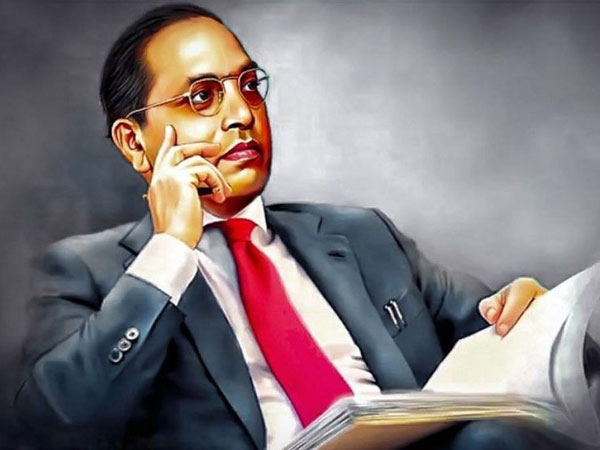
Dr. Bhimrao Ramji Ambedkar, (affectionately called Babasaheb), the exalted Guru to many who fight against social injustice and inequality in India, played a pivotal role in shaping the country’s constitution, championing the rights of marginalized communities, and female empowerment. While his contributions to Indian society are widely recognized, it is essential to appreciate the profound influence that America had on his life and ideologies. His education, exposure to social movements, and philosophical insights gained during his time in the United States shaped his fight against caste discrimination and his quest for social justice in India.
Dr. Ambedkar’s transformative journey began when he was awarded a scholarship at age twenty-two, by Maharaja Sayajirao Gaikwad, the erstwhile nationalist Ruler of Baroda to pursue higher education at Columbia University in New York in 1913. In America, Babasaheb experienced freedom and equality like never before. His interactions with his fellow students and professors as well as seemingly mundane interactions with ordinary Americans sowed the seeds of future self-respect, self-reliance, and his fight against the attitude of the marginalized community of helplessness and accepting their situation at that time as unalterable providence. Dr. Ambedkar wrote: ‘The best friends I have had in life were some of my classmates at Columbia and my great professors, John Dewey, James Shotwell, Edwin Seligman, and James Harvey Robinson.’” (Source: Columbia Alumni News, Dec. 19, 1930, page 12.)
After working hard for two long years he obtained his MA degree in 1915 for his thesis Ancient Indian Commerce. In 1916, he read a paper on Castes in India, their Mechanism, Genesis, and Development, before the anthropology seminar of Dr. Goldenweiser. He simultaneously worked on another thesis, National Dividend of India: A historic and analytical study which was accepted by Columbia University in June 1916. This thesis was published as the book titled: The Evolution of provisional finance in British India. This famous book became a companion to the members of the Indian legislative council and the central assembly at the time of budget discussions during the British regime. He completed his M.A. and Ph.D. in Economics and Sociology at Columbia University and later went on to earn a D.Sc. in Economics from the University of London. These achievements were possible due to his superhuman efforts. Babasaheb studied for 18 hours a day during his stay in America. At the same time, he saved money from his scholarship by subsisting on a cup of coffee, two muffins, and a single meat or fish dish costing him $1.10. A portion of the saved money was remitted back home to support his family. During his stay in New York, he purchased 2000 old books. Unfortunately, many were lost in their transit to India. These educational experiences in America not only broadened his horizons but also deepened his understanding of social issues and the struggle for civil rights.
During his time in America, Dr. Ambedkar had the opportunity to witness and engage with various social movements that advocated for equality and civil rights. He was exposed to the works of prominent African American leaders such as W.E.B. Du Bois and the ideas of the suffragette movement. He drew parallels between the discrimination faced by African Americans and the caste-based discrimination prevalent in India. He witnessed firsthand the fight for the principles of liberty, equality, and justice, during his time in America. Another American personality whose work influenced Dr. Ambedkar, was Booker T Washington, who was the president of the Tuskegee Institute and advocated for progress of Black people through education and entrepreneurship. Drawing upon the strategies employed by African American activists, after his return Dr. Ambedkar initiated peaceful protests, organized mass movements, and advocated for legal reforms to secure the rights of the oppressed Dalit community.
America’s influence on Dr. Ambedkar extended beyond social and political movements. It significantly impacted his philosophical outlook on life and social justice. He adopted the ideals of democracy, individual freedom, and egalitarianism from American thinkers such as Thomas Jefferson and John Dewey. The concept of “one person, one vote” resonated deeply with Dr. Ambedkar, who sought to empower the marginalized communities in India and ensure their representation in democratic processes.
Among Dr. Ambedkar’s many contributions to modern India was his instrumental role as the Chairman of the Drafting Committee of the Indian Constitution in 1947. His exposure to the American Constitution and its emphasis on civil liberties and equality influenced his vision for an inclusive and just society. Dr. Ambedkar incorporated several provisions in the Indian Constitution to safeguard the rights of the marginalized, including affirmative action policies, reservations for Scheduled Castes and Scheduled Tribes, and the abolition of untouchability.
Dr. Ambedkar’s legacy stands as a testament to the transformative power of cross-cultural exchanges on fertile minds and hearts. His enduring impact on anyone seeking the pursuit of a more equitable and inclusive world transcends the borders of India. A proposed Ambedkar statue as a part of a memorial is in the process of being built in the town of Accokeek, Maryland which will serve as a center-point for his legacy in the USA.
My new year’s resolution for 2020 is to internalize the principle of Detachment. Over the years, as we meander along the path of self-realization, attachment to people, material things, achievements, and identity have been a heavy ball and chain around our minds, preventing it from soaring the skies.
We raise our children and think that we put years of sacrifice, effort, and delay our gratifications to make them what we think they should be. Then one day they find themselves. Suddenly, the parents who were the main characters of the film become supporting actors and eventually get delegated to a cameo appearance. To our chagrin, some new characters who were completely unknown a few years ago take over the main roles- boyfriends, girlfriends, husbands, wives, etc. As I prepare myself to experience these changes, I am reminded of the huge pipelines that carry water over great distances. While the water is in the pipe, the pipe protects the water from contamination. The pipe gives the water its shape. The pipe thinks that the water belongs to it. The moment the water leaves the pipe it becomes true to its own nature and fate. The pipe no longer controls the water. All that is left behind is the dampness, which in our case are memories. Two trains travel in one direction for a segment of their journey. For a time being, their speeds are the same, and the passengers in both trains feel that there is no motion. This is the time we spend together as a family. Eventually, the tracks diverge. Detachment is very difficult to practice. It was extremely difficult for me to drop my first born to college. I dread the time when my daughters will get married.
We are also attached to our successes and more attached to our failures. It is somewhat easier to let go of our successes. We get used to them. We cling to our failures desperately. Failures are in careers, businesses, and the worse ones are in relationships. Instead of letting go, we cover them with a shroud of newer attachments. The zombies of past attachment surface at the most inopportune times in our thoughts. The attachment to financial success and fame sometimes forces people to continuously maintain a defensive shield around them, and every interpersonal interaction is looked upon as a possible exploitative situation. I once met a somewhat famous Indian comedy actor who had immigrated to UK and was working temporarily in a grocery store in London. I was told by his friend that he found this situation very liberating rather than humiliating. It is embarrassing to remember when I was considering reordering new business cards which would mention the recent honorary degree I received in my field of practice, when my original cards are still sitting unused, given that my field of medicine does not involve much in-person interaction with patients.
Detachment does not mean abandoning your duties. Many self-proclaimed ‘detached’ aspiring Hindu renunciates (future monks) have been sent back by their Gurus to fulfill their roles and duties which they had abandoned. Running away from your duties is cowardice. Being detached while fulfilling your role in the material world is the sign of spiritual awakening. First step is to become aware of your attachment in specific situations. Then, try to think as a neutral observer and separate your preconceived notions from hard facts. Afterwards, imagine the attachment-inducing object as a butterfly fluttering its wings emerging out of the cocoon. Smile and let it fly. If this fails, try again next time. One day we will all be free.
Dnyaneshwar was a thirteenth century saint and philosopher from India. He was a great proponent of Advaita, a very popular Hindu philosophy, which for in simple words professes that GOD is everything. Using a common metaphor, the GOD is the potter, the intelligence of making pots, the clay, the pottery wheel, the land on which the pottery making is occurring as well as the air inside and outside the pot.
In his very short life of 21 years Dnyaneshwar enlightened ordinary mass, and left behind profound philosophical works in form that could be understood by the lay masses. One of his books is Dnyaneshwari, which was a poetic translation of Bhagwat Geeta from Sanskrit into the local language of Marathi.
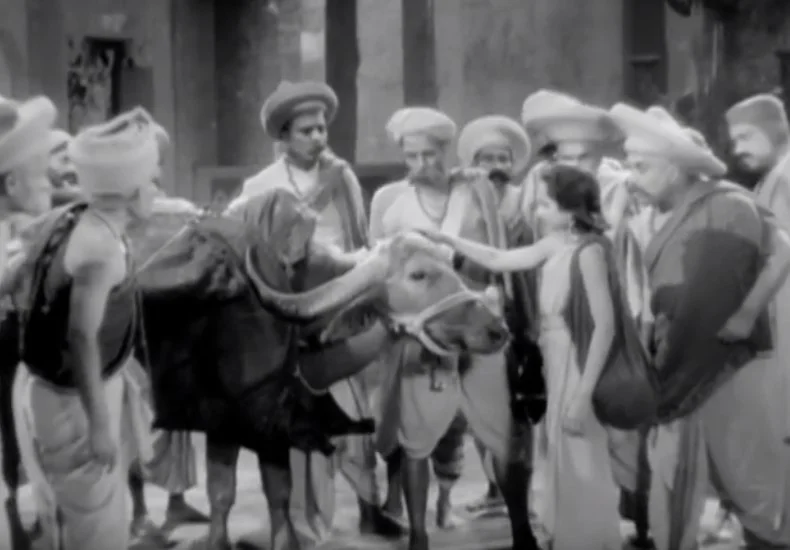
One day young Dnyaneshwar got into a debate with a local scholar who ridiculed him on the Advaita philosophy. Incidentally, there was a man leading a male buffalo (called reda in Marathi) walking down the street. The scholar asked Dnyaneshwar whether he and the male buffalo shared the same divinity. Dnyaneshwar affirmed. The scholar laughed and said that then the male buffalo should be able to recite the scriptures. As the locals gather around, Dnyaneshwar lays his hand on the buffalo’s head. Miraculously, the buffalo starts reciting scriptural mantras.
I have been associated with many such Dnyaneshwars in my life. Through their discourses, books, articles and informal talks they have laid their hands on my forehead, and whatever comes out of my keyboard (not pen any more) is through their grace. The metaphor of male buffalo is very apt that they are not very useful. The female gives milk. Sometimes the males are used to plow fields. Even this lowly animal shares the same divinity with all the creation. If we recognize the shared divinity, world peace will no longer be a fantasy only for idealists.
The home page has a still from 1940 biopic Sant Dnyaneshwar.
In Sanskrit, the ancient language of the Hindus, there is a term called Simhavalokan – Lion’s gaze. When a lion is walking, after covering a distance, he will pause and turn back, as if contemplating where he came from, and then charting his future course. In short Simhavalokan is ‘in retrospect’.
This year as I approach 50 years of my existence in this human body, I too am contemplating the goal of my life through the lens of the Hindu philosophy. In Hindu philosophy, there are four goals of human life: Artha, Kama, Dharma, and Moksha. Each life form is in the pursuit of happiness. Based on the degree of spiritual evolution, the perception of the pursued happiness evolves. In the most basic form, our happiness is related to the degree of our consumer abilities, which forms the basis of two of the four goals. The first goal of any life form is Artha, which can be translated as security or survival. This includes shelter, food, security from your enemies, and for humans, financial security. The second goal of all life forms is Kama, a desire for pleasure. The pleasure can be sexual or for humans it can be secondary to entertainment, gourmet food, desirable clothes, dance, music, etc.
In pursuit of Artha and Kama, we need to be conscious that others have similar needs too. Our pursuit of happiness should not hamper the pursuit of happiness of others or deliberately cause someone else’s pain. To prevent the abuse of others during our pursuit of happiness, we need Dharma and Moksha. Dharma is derived from the root word Dhr-, one which supports. Dharma is the moral law that supports the existence and sustenance of the individual and society. Dharma encompasses the duties of an individual. When everyone performs their duties, everyone’s rights are automatically protected.
A life of Dharma is lived when after our basic needs are satisfied, we graduate from being consumers to becoming contributors. A contributor seeks beyond his own needs for the benefit of society. The pleasure of contribution is more sustaining than the temporary pleasure of egotistic self-satisfaction. As a life of Dharma is lived, a human realizes that there is an ultimate goal, a limitless existence called Moksha. Moksha is to be one with the Divine after death, getting liberated from the cycle of reincarnation. Hindus believe in Divine justice through reincarnation. We are reborn to live as some life form, to suffer for or receive pleasure for our current & past actions. While we have to suffer for the bad action, the way to avoid being reborn is to be unattached to our good actions. We should avoid ‘my social work’, ‘my donation’, ‘my charity’. Performance of good actions without a sense of ownership of the effect leads to a soul with no attached baggage, clearing the way to attain Moksha. The best way to be unattached from your actions is to perform good deeds as an offering to the Divine.
Moksha has nothing to do with the method of worship, religion, or belief system. It is attainable for all humans regardless whether you believe it or not. Every living entity in the entire creation is capable to the realization of Moksha, receiving complete freedom and oneness with the Divine, whether after this life or after multiple births. Just act with the mental state of Edam Namama- Nothing is mine. Every aspect of my life I surrender to the Divine.
Yesterday, I was at a dinner hosted at a friend’s house when the person sitting opposite me introduced himself. In turn I introduced myself by just the name and expected to return to casual polite conversation with everyone. But he looked at me, and he repeated my name. He exclaimed, “You may not remember me, but you saved my life.” In my profession as a physician, I had apparently done something completely unaware, which was beyond the expected norms, and which greatly helped him. He was profusely thankful to me in front of everyone. On my way home, I was thankful to him in my mind for the opportunity he had provided me to decrease my human debt.
All humans are born with certain debts which are called ‘Runa’ (roona). We have accumulated these runa in all our previous lives, and we continue to accumulate them in this life. The runa occur when someone else does something for us, and we owe them for that. The runa tie us to others. To achieve Moksha after we finish our human life, meaning we achieve liberation from the cycle of rebirth, we need to clear all our runa by performing actions to pay back these helpful deeds. At the same time it is paramount that we should not take ownership of the good acts we perform, so as to not create new bonds.
The runa are of five kinds:
1. Runa towards parents: This runa is cleared by taking care of your own parents as they age. In our lives, many people have stepped in the role of our parents. To pay back that runa, we need to help take care of all the elderly. Visiting elder homes to talk to residents who may yearn for company, getting children to send good-wishes cards to retirement homes, or volunteering in activities that benefit seniors all help decrease the runa.
2. Runa towards teachers: The best way is to teach needy students. If you can, help teachers in underserved areas with school supplies. Volunteer at schools which need help. Attend and organize teacher appreciation events.
3. Runa towards other humans: To thrive and prosper, to survive in this life, all of us need each other. This runa is cleared by helping others. The greater the difference between you and the helped person, the greater is the effect. Dedicating a small fixed time per week facilitates these activities.
4. Runa towards nature: We are born at 5-15 pounds of weight. Our adult body is a collection of material from this mother earth, whether from plants or other animals. To sustain this body and mind, we need to sustain the environment. We clear our runa to nature by using only what we need. We milk the nature, instead of slaughtering it. We heal nature’s wounds by replanting, cleaning, and nurturing our environment.
5. Runa towards divine: Surrendering our ego to the divine helps decrease the runa. Of course, this runa is never cleared, and it is not possible to be cleared. However, worshipping in your own manner, and allowing others to worship in their manner, thereby not imposing your beliefs on others, helps you mitigate this runa. I will end with a small prayer: May all be happy; May all be free from illness. May all see what is auspicious; May no one suffer. Aum, peace, peace, peace.
Sewa is selfless service performed without expecting anything in return. It is an act performed by humans as a basic property of being a human, not guided by the expectation of joy dependent on desire fulfilment. As a human we feel compassion, which is a state in which one sees all life forms as part of one’s own self, and thus everyone’s suffering as one’s own suffering. The action which then takes place in response to this compassion is sewa. Thus, sewa is a physical manifestation of the realization of shared divinity in all life forms.
Reasons for performing sewa:
1. Sewa is worship. As Swami Vivekananda said, “Be grateful to the man you help, think of him as God. Is it not a great privilege to be allowed to worship God by helping our fellow men?” Even if you are atheist or agnostic, being skeptic about the existence of God, being a pragmatic humanist behooves you to feel the suffering of fellow humans and feel the urge to eradicate it.
2. The world becomes yours. Every day we face the equation of ‘mine versus others.’ As we conduct sewa, the ‘mine’ side of the scale increases. You interact with people who are outside your usual comfort zone. You realize the commonality and emphasize on it. The differentiation becomes secondary, less glaring. Taken to the ultimate degree, it embodies the philosophy of ‘so ham asmi’ (I am what he is.).
3. Sewa explores your fullest potential. Most of us are identified by our job or a corporate title. Sewa activities let you expand your repertoire of attributes. A computer engineer becomes a coach, a favorite math teacher, an environmentalist. You gain knowledge, overcome shyness, enhance leadership skills, and discover abilities you never knew you had. You realize that there are many more facets of your personality that get exposed, accentuated, and polished.
4. Sewa lifts barriers. Sewa brings down the barriers between groups who have been separated by prejudice and stereotyping. It will alleviate the feeling of fear and hatred of people who are different. As you perform sewa, the served community gets curious about you in a positive manner. Once they come to know that you want nothing in return, they appreciate and accept you.
5. Sewa mitigates mid-life crisis. As we age, many of us start pondering our mortality and the legacy we leave behind. The self-focused definition of joy starts to manifest limitations. Sewa helps us look outside. Instead of complaining and blaming, we start looking for solutions. Trash on the highway becomes an adopt-a-highway project. Our attention, intellect, and material strength becomes manifest in creating solutions, instead of getting trapped in quagmires on unhealthy excessive self-analysis and criticism.
6. Sewa creates a better world for all. If the giver gives in such a way as to uphold the dignity of the receiver, over time the act of sewa empowers the receiver to be a self-respecting and self-reliant individual who can then perpetuate the cycle of serving others. Your act of sewa may have a butterfly effect of changing the life and destiny of a human or the entire humanity.
On a final note, lots of acts of sewa are done unseen, unstated, un-recorded, and unpublished in small ways without even being understood by the doer that they are doing sewa. Don’t be awed by huge sums and organized efforts by large charities and be dejected by your relatively meager effort. A drowning man needs only one strong arm at the right time to save him, not an aircraft carrier.
A Hindu perspective on discrimination Recently, I was fortunate enough to be on a panel discussion on the topic of AntiSemitism at B’Nai B’Rith senior housing apartment. As I heard the speakers voice their opposition to Anti-Semitism and support the people of the Jewish faith, the words of one of the adages of Hinduism reverberated again and again in my mind … Aham Brahmasmi – I am Bramhan – I am the whole.
The ancient wisdom proclaims that the true I in me is the same in you. The same divinity is in you and me, and in everything. Therefore, once I realize that we are composed of the same divinity, I cannot hate you based on you being yourself. A teacher once explained to me that according to Hindu philosophy if I was an earthen pot, then God or the divine force was the potter, the intellect of making the pottery, the clay used to make the pot, and also the content of the pot. The same God permeates me, you, and everything. Our separateness is an illusion, or Maya. In our human state, in our daily existence, we have to behave in a manner respecting this illusion, but if in our inner mind we constantly remind ourselves of our Universal oneness, then peace is the direct result.
In our conversations we use similes like brave as a lion, beautiful as a rose, crafty as a fox. What is the simile for a human? I believe it is ‘kind as a human.’ Human beings by their primary nature are kind. However, due to external factors we get tarnished and our true self gets hidden. We try to identify the self by defining ourselves as distinct from others. This distinctness is supposed to be our selfness. The defining border first includes ourselves as an individual, then family, then relatives, and then some group of individuals. This concept then mandates that someone has to be the others. For one reason or another, the others then get vilified. To rise above hate, we should not just tolerate others, but we should accept and respect them. The highest level is when we do not feel that someone is other.
A woman finds a lost child on the street outside her house. She cleans him, clothes him, and feeds him. After handing the child back to the authorities, she feels the satisfaction of service. Later in the day when she does the exact things to her own son, she does not give a second thought, and continues with her daily chores. Her kindness towards her own son was natural for her, and that kindness was so innate that it did not even register as something special she did for another human being. The rose will emanate its fragrance when worn in the hair of a beautiful woman, in a ditch by the side of the road, or in a pile of excrement. External factors will not alter its innate attribute. Each of us is like that rose. Our aroma is our kindness. Let us recognize the shared divinity within all the creation, express our true nature, and live in peace.
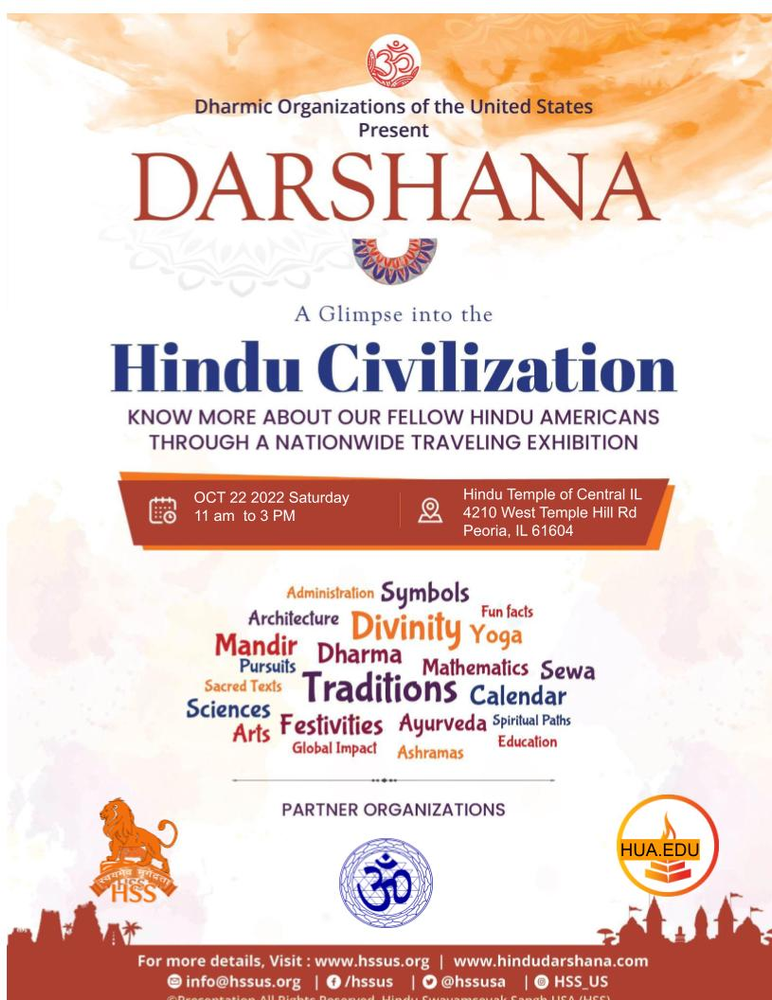
In our daily life, many of us interact with a Hindu in one way or another. Either your doctor, a coworker, a classmate, a close friend, a neighbor, a teacher, a business owner, or even a spouse. Some of us have witnessed a caricature of a Hindu in a TV serial or a cartoon. If you have ever wondered what the Hindu faith is or are curious to know more about your fellow Hindu Americans, this is a golden opportunity.
Let me ask you a question. What do we all want? We all want to be happy. All our endeavors are in that direction. We seek material goods, pleasant experiences, power over others, suitable mates, and many other things which give us fleeting moments of happiness. But is it possible to have everlasting joy? The ancient Hindu sages meditated on this question and came to this answer. Yes, it is possible. We can be permanently happy by discovering our true divine nature. How do we do that?
Hindus believe that the entire creation is made of pure consciousness. Our true nature is pure consciousness. Unfortunately, we have forgotten our true nature. Hinduism’s purpose is to return to our original selves and be permanently happy in our divine state.
The first step is to base our life on an ethical foundation called Dharma. A few qualities of ethical living are described in the Hindu scriptures. The main ones are Ahimsa, non-injury; Satya, truth; and Brahmacharya, a disciplined life of nonindulgence. These are not commandments but are nuanced guidelines. The guidelines are context-based. Our Dharma depends on our social situation. Dharma for a policeman will be different than that of a teacher. In the same person, the Dharma today differs from the Dharma tomorrow. It is different depending on our role at that moment. Our Dharma as a child is different from our Dharma as a husband or parent. It is different when we are working at our job. Dharmic living is doing our duty at the present moment, thereby pouring our hearts out every time we do something, all the time and without attachment. There are lots of Hindu scriptures that help us decide what is ethical in a given situation. Dharma is the internal nature of everything. On a more profound scale, Dharma sustains everything, including us individually, our family, our community, our country, our earth, and the cosmos. Dharma has a much more nuanced definition which the actual exhibition will illustrate.
The second step is Sewa which is selfless service. Also called karma yoga. For many of us, yoga is a contortion of body parts into postures. This aspect of yoga is just a small portion of the concept of yoga. The word yoga means union. It is the union of ourselves with our divine nature. Karma yoga is the action that unites us with our divine nature. We should do our duty because it is the right thing to do and not be result-oriented. Do everything as if it is an offering to the Divine. Hinduism understands that the path of connecting with divinity is difficult and has lots of steps. It needs mastery over oneself. It takes a long time which can span this life, but it also may need multiple lifetimes. In each life, you reach a particular point. In the next life, you begin where you left off and move forward or backward based on your action (karma) in the past birth. Everyone will get there at the end. How long it takes will depend on your actions. What you do now affects the future, either in this life or in the next life. There is accountability and consequence for everything you do. The flip side is that I accept what happens to me; hence I am able to accept sorrows and calamities. What I do and how I deal with my calamities affect my future. This way, we accept what is happening to us and do our best to handle it.
The third step is the choice of three spiritual paths. Hinduism recognizes that all people are different, so there are different paths suited for people based on their different temperaments.
• The first path is called Raj yoga. In this path, there are eight steps, of which the first two deal with practicing ethical restraints and ethical observations. The next three are physical postures and breathing exercises, as well as control of senses., The rest of the steps deal with meditation. This path requires consistent practice and great discipline.
• The second part is Dnyana yoga which is the study of scriptures. Hindus have a massive library of scriptures describing the different paths. This path is intellectually strenuous, and a seeker needs a subtle mind to grasp the concepts.
• The third path is Bhakti yoga, which is the path of Devotion. Essentially, we rest our minds and hearts in God. Anybody can do that, as there are no prerequisites.
This raises the question, Which or what God? In Hinduism, there are varieties of ways in which divinity or God is conceptualized
1) The first concept is pure consciousness which is described by the symbol pronounced as Om. Pure consciousness has no attribute and is infinite. This concept is difficult for many people to wrap their minds around.
2) The second concept is Ishwara which is divinity with attributes. The all-knowing, all-powerful, all-controlling supreme being., which has no physical form, and our mind is open to the abstract.
3) The third concept is the Divine in a personal form. People can connect much more easily to a personal form. With forms comes a personality and a story. If you know a story, you feel intimate with that form. You develop a close personal connection with that particular form of God. This tangible form is called a murti, represented by statues, photos, and physical symbols or objects. The mind stays easily focused on the physical form away from distractions. Although there are many physical forms of God, there is only one supreme being. Hindus worship one supreme being who can appear in many forms. We can use whichever form of divinity the divinity chooses to manifest itself.
Choose any of these paths. Take part of this and part of that. Mix and match. Let’s find the divinity within ourselves and recognize it in the whole creation. Let us be happy.
This is Hinduism in a nutshell. Our Darshana exhibition opens the shell somewhat for us to peer in and glimpse the unlimited.
Since ancient times stories of the prosperity and civilizational advancement in the Indian subcontinent have attracted foreign invaders for centuries. Many of those invaders were repulsed or subsequently driven out. Some willingly assimilated into the intricately interwoven fabric of the Bharatiya (Indian) culture and added to it. Unfortunately, the pattern of destructive invasions started in 711 AD with Muhammed bin Qasim, an Umayyad general who invaded Sindh. After this, a long list of invasions occurred, which left severe destruction of the culture, places of learning, and worship in their path. No ancient Hindu temple is intact in the entire northern half of India. This was accompanied by the mostly forced conversion of the native Hindu population to Islam. The long-term effect of this multigenerational trauma on the public psyche was very severe. Towards the end of British rule, people of the subcontinent were free to decide for the future. But instead of focusing on individual freedom, socioeconomic upliftment, and regional security, the Muslims demanded the partition of the subcontinent with the resultant genocide during the forced migration and the continued Kashmir violence.
The effect still resonates in the relationship between the Hindus and the Muslims who chose to remain in India (Muslims increased from 9.4% in 1951 to 14,2% in 1991- source www.factly. in). The effect is now evident even in America, with recent appeals by certain communities to avoid patronizing businesses and brands owned by people of the other community. (https://truthout.org/articles/activists-plan-boycott-of-us-companies-backing-indias-anti-muslim-policies/
12/n Just last weekend Mr. Iqbal, a #Hinduphobe member of the Islamist group – IAMC, which promotes Pieter Friedrich, was ranting against "Patels" and asking Muslims not to "shop at Patel Brothers". Eerily reminiscent of Nazi Germany's boycott of Jewish owned business in 1930s. pic.twitter.com/WRl9dfnlhr
During the pre-independence period, Mahatma Gandhiji attempted to build bridges between the Hindu-Muslim communities through actions such as supporting the Khilafat movement to modifying the famous Hindu bhajan Raghupati Raghava Raja Ram (adding the phrase Ishwar Allah Tero Naam to the lyrics). Many other well-known and not so known attempts were made. However, these failed miserably with the resultant separation of the Islamic countries of Pakistan and Bangladesh and a secular India. Moreover, the politics of division initially begun by the Britishers and continued by the subsequent Indian political parties resulted in worsening mutual suspicion and fracture of trust between the two communities, who together are inheritors of the rich cultural heritage of the entire subcontinent.
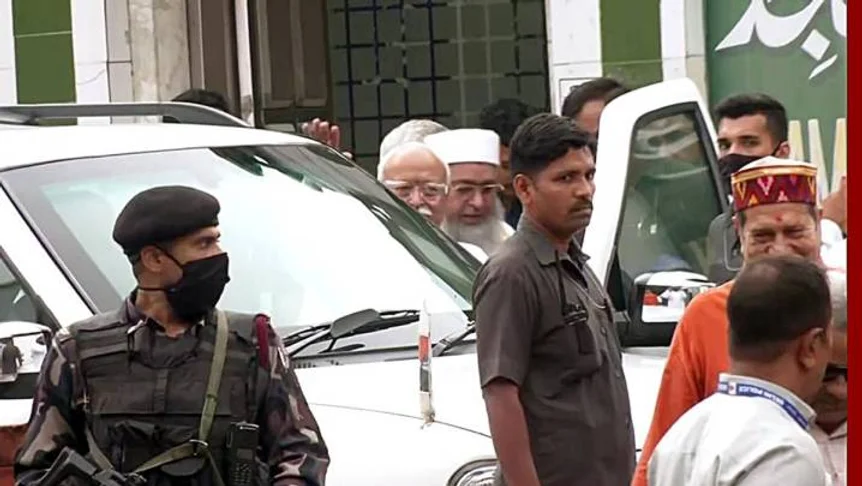
With the clear understanding that reconciliation and a united way forward are essential for the continued development of the entire population of India, recently, a group of five prominent Indian Muslims initiated a meeting and subsequently met with Rashtriya Swayamsevak Sangh (RSS) chief Mohanji Bhagwat on Aug 22, 2022, at Keshav Kunj RSS office in New Delhi. What struck out about this meeting was that a news conference or a press release did not follow it. Somehow the information about this meeting reached the media, and the resultant curiosity resulted in a series of interviews of these persons individually and in groups by the members of the press. The rest of this article is based on multiple video interviews and news articles about this meeting. All the statements attributed to the RSS Sar Sanghachalak (Chief) are quoted by the Muslim participants (with minimal paraphrasing by this author. Sources are listed below). The Muslim luminary participants of this discussion (henceforth addressed as visitors- since they visited the RSS office) were Najeeb Jung, Former Lieutenant Governor of Delhi, SY Quraishi, Former Chief Election Commissioner of India, Shahid Siddiqui, Editor of Nayi Duniya, and former Member of Parliament-Rajya Sabha, Lt. Gen Zameer Uddin Shah Ex Vice Chief of Army and the hotelier Saeed Shervani.
The visitors reiterated that ‘we are not politicians with large followings nor have received a mandate from any organization to represent the Indian Muslims, but this meeting was a humble effort from some common citizens to attempt reconciliation and rapprochement between two communities because we believe that is the only way forward for India to go ahead, which is the desire of any nation loving Indian.’ Furthermore, they believed that since the RSS is the largest organization of Hindus in the world, it was a good starting point to talk to the chief of the RSS and put out their concerns, hear his concerns, and take the matter forward on how together they can try to improve relations between communities and take steps to ensure there is no polarization between Hindus and Muslims.
The visitors hoped that if they were successful in opening a dialogue, they could convert this small initiative into a larger movement in which the people who are now skeptical would join them.
One interviewer Karan Thapar blatantly misinterpreted the Mohanji Bhagwat quote, “Every Indian is a Hindu,” by saying that this means that it does not include all the Indian minorities largest of which are Muslims. Dr. Jung promptly corrected him, saying, “It includes Muslims. Per Bhagwatji, Muslims are part of the larger family. Bhagwat redefined the word Hindu to mean Bharatiya (meaning ‘of Bharat,’ the ancient name of the Indian subcontinent). I am repeating his words that India has to go forward, and that can happen when there is reconciliation and when all communities go hand in hand. That is the clear message he (Mohan Bhagwat) gave us. Not just a message, those were his words”.
He further elaborated, “According to Bhagwat, we accept Muslims in the larger fold of Vedic Dharma, you can practice what you want, how u want”.
Part of this discussion was the open airing of the top grievances in the minds of both communities.
Hindu issues (per Mohanji Bhagwat):
• Hindus feel aggrieved when a large number of Muslims call them Kaffirs (non-believers). The Muslims are not accepting of Hindus. Dr. Jung said that he replied to Bhagwatji, “the Muslims and Christians have to accept that there are many paths that lead to God. Quran is misinterpreted a lot. Quran says your path is yours and mine is mine. Most Muslims and even clerics accept that calling Hindus Kaffirs is wrong. Koran says there is no compulsion in religion”.
• Bhagwat is asking Muslims to voluntarily stop eating beef because it is very sensitive to Hindus. In response to this, Dr. Jung felt that 90% of Muslims will agree to this request since if you want to live in peace, keeping from hurting the Hindu sentiment is essential.
Muslim issues (per visitors):
• Muslims don’t like being called ‘Jihadis’, ‘Pakistani’, or ‘Babur ki Aulad’ (progeny of Babur). Muslims are accused of love jihad. Indian Muslims don’t want to keep needing to prove their patriotism.
• Muslims are believed to be increasing their population to overcome Hindus in numbers by polygamy and not participating in family planning endeavors.
• Muslims feel insecure and are being made to pay a price for mistakes of the past.
One interviewer repeatedly asked the visitors, “Is this a man (Mohanji Bhagwat) whose sincerity you trust”.
“Yes”, was the visitor’s unequivocal reply. “Within one month after our meeting, he visited a mosque and a madrassa, which means he kept up the spirit of our meeting”. Since July, Mohanji Bhagwat also met with different Muslim groups one in Ghaziabad and one in Mumbai.
The visitors quoted Mohan Bhagwat multiple times.
• “I will make my effort, and it will take time to percolate”.
• “At the highest level of RSS, we have discussed this issue”.
• “Twenty percent is not a minority. They (Muslims) have to be part of the growth process”.
• “Hindutva does not exclude Muslims”.
• “India cannot exist without Muslims”.
• “We cannot conceive of India progressing without its Muslims”.
• “Everything will be done according to the constitution of India”.
They further added that Mohanji Bhagwat will appoint four RSS leaders to continue the talks. The visitors sincerely believed that if any hard-headed Hindu organization makes statements like calling for the genocide of Muslims, he (Bhagwat) will oppose that.
One of the interviewers asked about the nay-sayers who expressed that meetings such as these give legitimacy to RSS, and whether RSS is using this meeting for its PR purpose only. The visitors replied, “RSS has the support of at least half the Hindu population. Not only party workers in the ruling BJP but many in opposition parties also support RSS. An RSS volunteer is the Prime Minister of India and so are Chief Ministers of many states. Why do you think they need our credibility? Even if they are doing this for their image, it is good for everybody”. To the detractor who called them elitists, the visitors replied, “We are not fools. We live in public”.
“Open dialogue is the only way forward. No other country cares about Muslims. In Burma, in China, Muslim genocide is rampant. Pakistani is wagging its tail in front of China. No Arab nation is opposing China about its treatment of Muslims”.
The visitors mentioned that of the telephone calls they received, 90 percent of Muslims and non-Muslims supported this initiative. “There is overwhelming support in India for the idea of reconciliation. This is the time that the idea must come to fruition. We must engage, not only with RSS but also with the Jamat-e-Islami, the ulema of Deoband school”.
Per the visitors, planning for subsequent meetings is being made in which other issues like the issue of CAA and NRC will be brought up.
Watching the interviews filled me with hope. Am I being too naïve? The history of more than a thousand years suggests that the difficulties are seemingly unsurmountable. But a thousand years is a small period of time for inhabitants of Bharatvarsha (Indian subcontinent). Our ancient scripture Isha Upanishad says, “A wise man beholds all beings in the self and the self in all beings; therefore, he does not hate anyone”. Hopefully, all of us internalize this eternal wisdom, and not let differences in ways of worship alienate us from our true divine nature.