Blog

  • The Resilience of Ancient Traditions

    The Resilience of Ancient Traditions

    Recently we visited the Indian Pueblo Cultural Center in New Mexico near Albuquerque and perused the exhibition on the Ancient Puebloan culture and history. We learned about the massive destruction of the Native Americans by successive waves of colonizing nations of Spain, Mexico, and the United States. There was intentional genocide of people for their land and natural resources, presumed unintentional mass death by exposure to foreign pathogens brought by the colonizers, the exploitation of natives for labor, as well as destruction of their culture and religion by forced religious conversion. The story was sad and heart-wrenching.

    However, the Pueblo Indians have survived and currently practice some of their original cultures passed down through successive generations from oral traditions. They now practice Catholicism as a fusion of Roman Catholicism and native rituals. On the contrary, any remnant of the pre-Islamic culture in the Middle East1 or the Pre-Christian European Religions2 has been almost completely destroyed. There are no practitioners of the indigenous Arabian polytheism or ancient Semitic religions. Very few, if any, practitioners of Mandaeism, Manichaeism, or Zoroastrianism exist. Zoroastrianism practitioners called Parsis exist in India and have prospered (One of the largest business houses in India – the Tata family is Parsi.). Pre-Christian European religions like Norse Forn Sidr, Druidism, and Roman polytheism, among others, have been completely wiped out, except for some fringe elements of the society.

    In India, the onslaught of Islam for nearly two thousand years led to extensive conversion and destruction of places of culture and worship. India got partitioned into Islamic Pakistan, Islamic Bangladesh, and secular majority Hindu India. Most major places of worship of Hindus in northern India were destroyed by the religiously intolerant invaders, resulting in such an intergenerational psychological trauma that the Hindus have built very few grand religious structures even after independence in 1947. The geographic extent of Hinduism, which once extended from modern Afghanistan to Indonesia3, is now confined to mainly India and sprinkling of diaspora throughout the world. The hundred years of British colonization of India did not see extensive conversion or destruction. The British colonizers committed innumerable atrocities in India. Well-known are the three million preventable deaths during the Bengal famine of 19434, stealing nearly a trillion dollars’ worth of material wealth5 and destroying the ancient Hindu educational system6. But they were benign compared to the other colonizers like the Belgians in Congo, the Spaniards in Central and South America, as well as the Portuguese in Goa, Angola, and Mozambique. The Macaulay education system destroyed the Hindu educational system resulting in self-doubting generations of Hindus who, till now, seek validation from the west for every aspect of life. Still, the destruction was not as complete. I can speak, read, and write in my ancestral language Marathi. However, India would have been in a far worse situation if Spain or Portugal had ruled India. I quake with tribulation when I read about the actions of the Spaniards in South America and Central America, as well as the Portuguese in the Indian state of Goa and Angola. I am thankful to have still my Hindu name and access to the philosophical treasure trove of ancient Hindu wisdom.

    We cannot change the painful history of oppressed groups, but we can work to protect ourselves in the future. The people following these ancient traditions must come together and support each other. There is a sizeable silent number of good people in this world who are outside these traditions but are good humans. If they become aware of their numbers and strength, these people can pressure their governments to form a bulwark against current and future onslaught against the ancient traditions. While waiting on the bench near the exit, I overheard angry murmurs from the visiting group of young adults in the museum from other states and some from other countries expressing the need to do something for the oppressed people. I smiled with hope in my heart for our collective future.

    One organization attempting to unite ancient traditions is the International Center of Cultural Studies. https://www.iccsglobal.org

    1. Pre-Islamic Arabia 

    2. Paganism

    3. The spread of Hinduism in Southeast Asia and the Pacific 

    4. Churchill’s policies contributed to1943 Bengal Famine

    How Britain stole $45 trillion from India

    Featured image is A picture from the exhibit “Pivot Skateboard Desk Art Exhibit- celebrating rapid transition between traditional and say-day life of Native Americans.”

  • Raksha Bandhan – A potential world festival

    Raksha Bandhan – A potential world festival

    I am an optimist. I sincerely believe that if every human felt a bond with another, we may be able to overcome greed, lust for power, and insecurities and end all wars and resultant carnages. The more things we have in common, the better chance of this being possible (although all of us being humans was not good enough till now). A common festival celebrated all over the world by all humans irrespective of religion, race, geographic location, or social status, celebrated with OTHERS would be a good step in this direction. A festival celebrated by Hindus called Raksha-Bandhan is a good candidate for this World Festival.

    Traditionally, Raksha-Bandhan has been a festival during which sisters tie a decorated silken thread, a Rakhi, to the wrists of their brothers which establishes a bond or contract where the brother pledges to protect the sister, and the thread acts as an amulet with sister’s blessing to protect the brother. This was especially important when a married sister lived at a considerable distance from her parents’ home, and this festival was an occasion where the brother could visit her without protest from hostile in-laws. The sister would prepare a feast and welcome her brother. The brother in turn would give gifts to his sister, unfettered by his own wife. This relation between brother and sister could be non-biological, and there are many historical stories where a Rakhi-brother came through his obligation to help his Rakhi-sister in distress.

    In modern times, with many women being physically stronger than men, and physical strength being superseded by ballistic weapons, women routinely protect men from violence as police, soldiers, and bystanders. Additionally, physical strength is no longer the only shield, given that political power, financial power, and legal acumen may be very effective protective forces. Therefore, the organization to which I belong – Hindu Swayamsevak Sangh, USA (Hindu Volunteer Organization, USA) conducts a festival of tying Rakhis to police personnel, firefighters, as well as public officeholders, in addition to other volunteers of the organization. These Rakhis are tied regardless of gender, with a non-verbalized contract to protect each other when need arises. For the last sixteen years, more than a few dozen chapters have visited their brothers and sisters in the police station, fire stations, and elected official offices to explain the significance of the festival and tie the silken thread. This year we plan to expand to include sanitary workers, emergency communication centers, and locally any service providers who maintain safety of the general public.

    If this concept was expanded to and embraced by the general American public to appreciate and acknowledge not just the safety and security providers but also each other, crossing racial, socio-economical, and especially in the current environment, the political divide, this would strengthen our mutual bond. Assume for a second this concept taking hold in all countries and their citizens tying Rakhis to each other on one worldwide mutually agreed upon day, wherever all humans encounter each other. On the day, people will carry a bunch of Rakhis in their pockets as they leave their houses. Governments will issue biodegradable, nutrient infused viable plant seeds containing Rakhis for free distribution on railways and bus stations as well as airports. After the festival these Rakhis can be planted in any soil and seeds will germinate to give rise to plants. People will tie Rakhis to each other in international business meetings, security and peace

    negotiations, borders between countries, general passengers on airports, and even in the United Nations general assembly. Think about the impact on the overall human psychology where a physical action and the Rakhi – a physical memento – will remind every person the shared bond of mutual protection and welfare, even for one particular day of the year.

    Just something to think about, and possibly act on in the ‘not so distant’ future.

    First published in thecommunityword.com

  • Non-Anger (Akrodha)

    Non-Anger (Akrodha)

    There is a fable of a boy who is prone to angry outbursts. His father tells him to hammer a nail in the wooden fence post every time he is angry and abuses someone, and then remove that nail after he has apologized and made amends. After a week the boy proudly shows his father the post where he had hammered about a dozen nails and pulled them out. The father pats him on the back but points out the holes in the wood which remain despite all the amends.

    I wondered as to how many holes I have left on the psyche of my loved ones over the years. The Hindu scripture, Bhagwat Gita, states that to be able to receive the divine truth about the nature of things, an individual should possess twenty-six divine qualities. One of these is Akrodha, absence of anger, exemplified in the following story. One day a man asks a saint how he constantly remains calm and loving to everybody. The saint ignores him and instead tells the man that he will die in a weeks’ time. Knowing that the saint is a highly spiritually developed individual, the man believes him and immediately goes home. He puts his affairs in order, mends his relationship with his estranged brother and is extra loving to his family. He also gives up long standing grudges with his neighbors. On the seventh day, he touches the feet of the saint and says that he is ready to leave his human body with a serene mind. The saint advises him to contemplate on his last week and henceforth live his entire life, keeping in mind that the next instance could be his last.

    While some anger can motivate people to take an action against injustice, overall, the state of anger decreases cognitive and discernment ability. In terms of anger, human beings are at three levels. At the lowest level are openly belligerent people who are always waiting for a pretext to launch at someone. Some of these individuals think that they use their anger as a strategic tool to get what they want. At the middle level are the people who are also constantly angry but suppress it enough to be able to function in society. They use passive aggressive behavior, cynicism, and excessive critical analysis to manifest their pent-up anger. Finally, the remaining people are happy people who occasionally get angry for believing that someone is preventing them from acquiring something that will make them happy or that someone is responsible for their current unhappiness. These are the people who do not hold grudges and shortly return to their pleasant state. Each individual should self-realize their own situation, and only then will their evolution to the Akrodha state begin.

    The following are some of the techniques suggested by learned people: 1. Understand that regardless of the currently perceived imperfection, as a whole, the Universe is perfect. 2. Imagine yourself bathed with blue light, contrasting the red aura surrounding angry people. 3. Put a five-dollar bill in an anger management jar every time you get angry, which is aimed at building subconscious association of anger with loss of something previous. 4. Miss a meal after an anger outburst. 5. Offer one flower a day to the picture of the person who is the target of your anger, thereby completely reversing the emotional process. 6. Do three nice things to that person, with or without the knowledge of the target person. Over time the anger becomes a conscious process, which then you can control and voluntarily discard.

    Now we have all the gear, terrain charts, and know-hows to reach the goal of Akrodha. By realizing my own anger issues, and deciding to do something about it, I may already have begun my odyssey. Few fortunate people are very close to this goal, while many will never feel the need to start. Let’s pray that all of us who want to, will reach there.

    Respectfully submitted

    First published in thecommunityword.com

  • Lighting the light within

    Lighting the light within

    My family has had some ancestors who were highly spiritually evolved individuals. My paternal grandmother’s father was a householder yogi (yogi- one who seeks union of individual consciousness with the Universal consciousness) who held a day job as a government employee and raised a large extended family, but he was also an advanced yoga practitioner. Once, my grandmother explained to me his technique of meditation, where he turned both his eyes inwards and held concentration for a long time. He would see a light between his eyes, which he explained to her was the divine presence in his body. I tried the technique as a child but never saw anything. Over the years, I have realized that what he explained as a light was symbolic of the inner light. The light that drives away ignorance, illuminates the true knowledge, and takes us from being mere instinctual animals to the Divine.

    As the winter season approaches the countries in the northern hemisphere, each culture counters the long hours of darkness with festivals which involve symbolic lighting of lights. In Hinduism, the most famous fall/winter festival is Deepavali (October 27th for 2019), which means a row of lights. Historically, Deepavali was a celebration of the victorious return of King Rama with his wife who was kidnapped by an evil King Ravana sometime in the 15th century BCE. The victory is celebrated by lighting lamps, wearing new clothes, decorating the house, starting new account books, and distributing sweets. However, the deeper meaning is to reignite the light within. Just like during practice of any skillful event, we go through a dry run. Similarly, the external manifestation of Deepavali symbolizes cleaning the self (body and mind) and creating an environment of joy and well-being, which precedes the restarting of the quest for higher spiritual goals by lighting the pilot light of the spiritual furnace. The physical action of lighting the oil lamp has symbolic significance. The oil represents the bad tendencies of the person. The wick represents the ego. When lit with spiritual knowledge, the bad tendencies slowly get exhausted, and finally the ego also disappears. The flame is always directed upwards, symbolizing the higher aim. As the spiritual knowledge is shared, many lights are lit, and darkness of ignorance vanishes.

    Deepavali has five days. The first day is Dhanteras, when Dhanvantari – the Deity of health – is worshipped. The second day is Narak Chaturdashi, where symbolically, an evil demon is slayed. The third day is when Deity of Prosperity – Laxmi is worshipped. The fourth day is when wives seeks blessings for their husbands, and in return, they gift their wives to appreciate the other half of the family arch under whose care the rest of the family members flourish. The fifth day is when sisters seek blessings for their brothers, who appreciate their sisters with gifts. This sequence of events symbolizes the ascent of the person. Prior to any spiritual quest, the physical body is to be strengthened. A cramping aching back or joints will not let a person sit undistracted for a long time. Then the outside disturbing elements (demons of sorts) are to be subdued to establish external peace. After peace is established, the material affluence is gained so that the worldly duties, like taking care of the immediate family and the extended (whole creation) family, is achieved. Then comes the appreciation of the spouse without whose support none of this would be possible, and finally the representative of the family who took care of us before we went on to start our own family. After completion of these worldly duties, we are ready for seeking the absolute.

    Regardless of which pathway you follow, and which spiritual medium is your guide (guru, messiah, book, prophet or non-manifest entity), these steps in one form or the other will definitely lead you to your ultimate goal- the manifestation of the light within!

    First published in thecommunityword.com

  • The wish granting tree (Kalpataru)

    The wish granting tree (Kalpataru)

    In prehistoric times the good and the evil forces churned the ocean of the cosmos, and one of the unique objects which the Divine granted to the churners was a wish granting tree. One day a traveler comes across this tree and sits down in the shade, not knowing the special nature of the tree. Admiring the dense shade of the foliage, he wishes that he had a bed to take a nap. Suddenly a bed manifests. After his nap he wishes for food, which then materializes in front of him. Then he desire for a drink, and an assortment of libations are presented. After his immediate needs are satisfied, he wonders where all the goodies came from, and whether there were ghosts on the tree. Immediately, ghosts show up. He gets very scared and worries that the ghosts will eat him, and they do!

    We are constantly under a wishing tree. Our conscious mind, body, emotion, and prana (life force) when aligned together will grant us our wishes, whether they are success in profession, studies, or relationships. However, for most of us these forces conflict with each other. We hamper our own progress by putting up obstacles of self-doubt, false comparison, and blaming others. Frequently, we hear someone say, “But I am only a human.” This is an extremely tragic misconception that the highest life form is used as an epitome of weakness. As a human we can achieve what we truly want. But what do we want?

    In a certain village, there was a young boy who could not walk. He used to watch other kids play, and since he could not join them, he would hold their stuff, bring them water, and get joy from being part of the group. One day he heard of the wishing tree and decided to ask it to cure his legs. He reached the tree and instead of going directly, waited and watched from a small distance. First, a group of children came to the tree and asked for candies and toys. The tree showered them with lots of delicious candies and toys. But gobbling the candy gave them tummy ache and they got bored with the toys. The kids came back and threw the remaining candies at the tree. An old man came asking for a beautiful young bride. In few weeks, the man got tired from being suspicious that his young wife may be interested more in the younger neighbor than him. Some men came and asked for fame, fortune, and power. Fame was followed by jealousy. Fortune followed by greed, and power followed by enemies. If you ask for freedom, then the risk of getting lost is inherent. In a short amount of time, people who were begging the tree for boons wanted to cut the tree and burn it to the ground. Everybody blamed the tree. Nobody realized that all their misery was due to desire and fear. The quest to satisfy desire was like throwing gasoline to extinguish a fire. Similarly, fear resulted in suspicion, cowering for safety, and the inability to advance due to fear of failure. The boy then realized that the only way to make the tree work for you was to wish for somebody else’s benefit. The joy of enabling someone else to become happy was the true satisfier of desires and overcomer of fears.

    This is the secret of the Kalpataru. When a human aligns all mind, body, emotion, and prana (life force) for the betterment of others, all their wishes come true. The next human you meet today, just smile, and truly wish him well. If you are going to ask, “How are you,” then plan to wait, listen, and care as to how they really are feeling and if you could help in any way. When you say good-bye, do truly wish the person the best of everything. Overtime you will not only get your wishes granted by the Kalpataru, but you will become a Kalpataru.

    First published in thecommunityword.com 

  • Guru

    Guru

    My salutations to the guru who opens the eyes of the one who is blind due to the darkness of ignorance with an ointment of knowledge.

    The first full week of May is celebrated as Teachers Appreciation week in USA. I fondly remember Teachers’ day in my school in India when the graduating 10th grade students took on the role of teachers for a day, and taught lessons. As I grew older, the impact of the teacher became more and more evident to me. Not only we learned from teacher the subject content, but also learned how to learn. They taught me how to think and at their best, they taught me how to differentiate good from bad masquerading as good.

    The word Guru is formed from root words Gu- darkness and Ru-dispeller of. In Hindu tradition, a Guru is placed in an exalted position. Any Hindu who has achieved prominence in a field, will proudly proclaim their educational lineage. This is especially true among classically trained musicians and dancers, who will place a photograph of their teacher in front of them during a recital. Children are told many inspirational stories of great teachers and their students. Often repeated is a story of the King Shivaji who offered his kingdom as the honorarium to his Guru Saint Ramdas. The Guru in turn asked the King to rule in his name, thereby setting a standard for the behavior of the ruler and principles for administration. In modern times our school teachers embody these attributes. I can vividly remember the times I have glanced into classrooms at the school where we conduct a reading program. The patience and dedication with which the teacher interacted with students especially some with behavior difficulties was superhuman. Even gifted students can be exacting at times. But, day after day, year after year, decade after decade, the teacher turns out men and women who will shape the future of mankind. These special beings deserve more than a thank you card. In USA, Hindu Swayamsevak Sangh, an organization to which I belong, conducts Guru Vandana Program annually. Last year seventy chapters invited teachers to a ceremony where they were felicitated in a traditional Hindu ritual with garlands, offerings and obeisance.

    There are countless ancient manuscripts in Hindu literature and philosophy where texts are attributed to a name but were authored over thousands of years. This is because each subsequent writer wrote under the name of his teacher, who had himself written under the name of his own teacher. Thus, the first teacher’s name carried on for centuries. Just imagine this in today’s world of copyright and patents.

    The first teacher of a child is the mother. This education begins in the uterus prior to exposure to the outside confusing, cacophonic world. This stresses the responsibility of the expectant mother and the people in her vicinity in maintaining the ambience where virtuous thoughts and acts prevail. Keeping such a pristine environment is difficult but attempt should be made in that direction.

    The relationship between student and teacher is bidirectional. Given the god-like status of the teacher, it behooves them to maintain their behavior to that standard, not just in the school environment but also at home, on weekends and on vacation. A student should never see the teacher in a less than optimal situation. I understand that some will say, “I did not sign up for this tall order. Just give me my salary and I will educate your children.” That’s ok. But for the rest, I bow my head to you. May you complete your evolution from teacher to Guru.

  • Hinduphobia: A sad attempt to tarnish a noble and universal doctrine.

    Hinduphobia: A sad attempt to tarnish a noble and universal doctrine.

    A few weeks ago, I was browsing the Darshana exhibit on Hinduism: https://hindudarshana.com. I was overwhelmed by the appreciation of the great humanistic view of the Hindu Dharma and the universally applicable philosophy it teaches to all humans regardless of their way of worship. I was glad that we were sharing this marvel with our fellow Americans through the avenue of the exhibition throughout the USA. Sadly, a few days after the exhibition, many of our esteemed public official guests who had graced the exhibition received letters from a group of miscreants spreading false information about Hindus, Hindu organizations, and Hinduism to besmirch the goodwill generated by the exhibition. I contemplated why somebody would engage in this behavior.

    I realized that the people who denigrate Hindus generally fall into five categories:

    1. The first category is the good-natured people who are misguided by the articles and news items in the mainstream media. Many respectable media houses selectively highlight unfortunate events in India. They rarely have stories of any positive stories about Hindus or India. These media sources will selectively splice stories to demonstrate how a Hindu group in India violently reacted to some provocation and will not talk about the inciting act itself. Historical wrongs like the destruction of the temple at Ayodhya (the birthplace of Lord Ram) will not be discussed. Instead, the reclamation of the ancient space will be addressed in a negative light (for review on this topic please read, https://pattekar.medium.com/the-epochal-beginning-of-the-restoration-of-one-of-the-holiest-sites-of-hindus-a-story-of-loss-3e2f19d70e5). Attacks on Hindus are never addressed in American news. Hindus are lumped as Indians or minorities described by their specific religions. The prime example of this phenomenon is the selective reporting about the riots in Gujarat in 2002. None of these stories mention that the riots were a reaction to the 58 Hindu pilgrims being burnt alive by a communal mob. Atrocities committed by minorities in India are never given airtime. No American media reported on the recent decapitation of a Hindu shopkeeper by a minority mob in India for expressing support for a Hindu politician. The only people interviewed for news items are those with a particular slant to support the media’s intentional preconceived bias. The Hindu genocide in Kashmir gets minimal airtime on media like NPR in contrast to the widespread negative coverage of the Indian government’s attempt to maintain the rule of law. The good-natured American people who read the articles believe them without understanding the background and the multifaceted premise.

    The onus for responding to these people falls entirely on the American Hindus. Hindus in their daily lives should interact with their neighbors and colleagues and take the initiative to explain any news about Hindus and India to friends and colleagues. Hindus should also be more represented in the media, a refrain voiced by many for a long time.

    2. The second category is the religious zealots who are frustrated by the resistance shown by Hindus to their attempt to convert them to their religion. These zealots spend millions of dollars and extensive effort to convert Hindus. They want to spread misinformation, disinformation, and mal information about Hinduism and Hindus to decrease the confidence their vulnerable Hindu targets have in their Hindu upbringing and philosophy. These missionaries also aim to increase the monetary donation collected from their supporters to “harvest the souls” of Hindus. Nice American people who will never hurt a fly in their own life will donate their hard-earned money to the missionaries with a misguided good intention of “pulling the Hindus out of the darkness of Hinduism”. When we hear our American friends or acquaintances say proudly that they’re going to India for missionary activities, please question them on why they want to practice the violence of breaking the Hindu society. To quote the great Hindu teacher Swami Dayanand Saraswati, “Conversion is an act of violence because it hurts deeply, not only the other members of the family of the converted but the entire community that comes to know of it”.

    I have seen extensive conversion activity targeted toward Hindu students in American Universities. These students are very emotionally vulnerable due to financial, psychological, and educational stress. The vulnerable young students are preyed upon by people to convert them to their religion. This psychospiritual genocide of Hindu University students can be counteracted by the Hindu American people living in University towns who should take an interest in the welfare of Hindu students. This can be done by socially engaging the existing students and new arrivals. The established Hindus should connect with Hindu student organizations at the universities, participate in cultural programs and invite student groups to their homes, temples, and social functions.

    3. The third category is people who themselves, their loved ones or their ancestors have been abused by the many bad people who have misinterpreted and misrepresented Hindu scriptures to discriminate and exploit their Hindu brethren for generations. These people have perverted the original ancient horizontal organizational system of classification of society. This system divided people into groups called varna based on an individual’s natural inclination as well into professional family guilds of jati. The system was corrupted into a vertically stratified caste system where the groups who were in power by their knowledge or physical/economic strength exploited and abused the people from the lower weaker strata. On one end of the spectrum, I have firsthand witnessed discrimination against people based on their caste during my student days in villages around my medical school. On the other end, I have also intimately experienced the noblest human beings of the ‘so-called upper castes’ who strived for uplifting people from the lowest social groups. I am a product of a mixed jati parentage myself. Discrimination based on jati and varna is illegal in India since the establishment of the Republic of India, in the year 1950, although in certain quarters of Hindus, this behavior unfortunately persists.

    Every Hindu especially those in the privileged groups should take it upon themselves to integrate the people of marginalized communities into their social circles. This has to be done on an individual basis. In terms of America, this means keeping your eyes open and figuring out who among your colleagues and neighbors are from the community which has been historically mistreated by the socially advantaged Hindus in India and taking it upon themselves to form friendships and includes them in the religious rituals and by just be a true Hindu.

    4. The fourth category is the academics who have made a career by calling themselves experts on Hinduism by selectively highlighting adverse societal phenomena and interpreting every possible Hindu principle to twist it into its worse possible interpretation. These are highly intelligent malevolent individuals who willfully ignore the true universally benevolent nature of Hindu Dharma. These people can only be counteracted by Hindus entering the liberal arts fields of study. Unfortunately, in America, most Hindus are in STEM careers. If more American Hindus including non-Hindu Americans, with a true understanding of Hinduism, enter the academic world and present the Hindu principles, these rabid wolves in sheep’s clothing will be exposed.

    5. Lastly, falling into the fifth category are those Hindus who believe that since they have achieved fame in one field like acting, modeling, or business, they have an acquired qualification to make ignorant baseless blanket statements about Hinduism. These people usually parrot whatever their friends want to hear and cause grave damage since many young Hindus value their opinion, which is circulated on popular social media. The only way to neutralize these people is to immediately repudiate their statements on the same media platform by a large number of true scholars.

    based on an individual’s natural inclination as well into professional family guilds of there may be many more categories in which I believe the readers would come up with their observations. I implore you my friends, to please not be a passive witness but be proactive and if needed, reactive to this onslaught on Hinduism. Please make sure that the beautiful treasure trove of universal principles is shared with humanity and not relegated to some musty corner of obscurity.

  • Basic Philosophy of Hindus

    Basic Philosophy of Hindus

    In our daily life, many of us interact with a Hindu in one way or another. Either your doctor, a coworker, a classmate, a close friend, a neighbor, a teacher, a business owner, or even a spouse. Some of us have witnessed a caricature of a Hindu in a TV serial or a cartoon. If you have ever wondered what the Hindu faith is, or you are curious to know more about your fellow Hindu Americans, there is a golden opportunity close to you.

    We all want to be happy. All our endeavors are in that direction. We seek material goods, pleasant experiences, power over others, suitable mates, and many other things which give us fleeting moments of happiness. But is it possible to have everlasting happiness? The ancient Hindu sages meditated on this question and came to this answer. Yes, it is possible. We can be permanently happy by discovering our true divine nature. How do we do that?

    Hindus believe that the entire creation is made of pure consciousness. Our true nature is pure consciousness. Unfortunately, we have forgotten our true nature. The entire purpose of Hinduism is to get back to our original selves and be permanently happy in our divine state.

    The first step is to base our life on an ethical foundation which is called Dharma. To live ethically, there are a few qualities that are described in the Hindu scriptures. The main ones are Ahimsa, which is non-injury, Satya which is truth, and Brahmacharya which is a disciplined life of nonindulgence. These are not commandments but are nuanced guidelines. The guidelines are context-based. Our Dharma depends on our social situation. Dharma for a policeman will be different than that of a teacher. In the same person, the Dharma today is not the same as the Dharma tomorrow. It is different depending on our role at that moment. Our Dharma as a child is different than our dharma as a husband or as a parent. Dharmic living is doing our duty at the present moment, thereby pouring our heart out every time we do something, all the time and without attachment. There are lots of Hindu scriptures that help us decide what is ethical in a given situation. Dharma is the true internal nature of everything. On a more profound scale Dharma is what sustains everything, including us individually, our family, our community, our country, our earth as well as the cosmos. Dharma has a much more nuanced definition which the actual exhibition will illustrate.

    The second step is Sewa which is selfless service. Also called karma yoga. For many of us, yoga equates to a contortion of body parts into postures. This aspect of yoga is just a small portion of the concept of yoga. The word yoga means union. It is the union of ourselves with our divine nature. Karma yoga is the action that unites us with our divine nature. We should do our duty because it is the right thing to do and not be result-oriented. Do everything as if it is an offering to the Divine. Hinduism understands that the path of connecting with divinity is difficult. It needs mastery over oneself. It takes a long time which can span this life but also may need multiple lifetimes. In each life, you reach a particular point. In the next life, you begin where you left, and move forward or backward based on your action (karma) in the past birth. Everyone will get there at the end. How long it takes will depend on your actions. What you do now affects the future either in this life or in the next life. There is accountability and consequence for everything you do. The flip side is that I accept what happens to me, hence I am able to accept sorrows and calamities. What I do and how I deal with my calamities affect my future. This way we accept what is happening to us and do our best to handle it.

    The third step is the choice of three spiritual paths. Hinduism recognizes that people are different. So there are different paths suited for different people based on their different temperaments.

    • The first path is called Raj yoga. In this path, there are eight steps of which the first two deal with practicing ethical restrains, and ethical observations. The next three are physical postures and breathing exercises as well as control of senses., The rest of the steps deal with meditation. This path requires consistent practice and great discipline.
    • The second part is Dnyana yoga which is the study of scriptures. Hindus have a massive library of scriptures describing the different paths. This path is intellectually strenuous, and a seeker needs a subtle mind to grasp the concepts.
    • The third path is Bhakti yoga, which is the path of Devotion. Essentially, we rest our minds and hearts in God. Anybody can do that as there are no prerequisites.

    This raises the question, Which or what God? In Hinduism, there are varieties of ways in which divinity or God is conceptualized.

    1. The first concept is pure consciousness which is described by the symbol pronounced as Om. Pure consciousness had no attribute and is infinite. This is a difficult concept to wrap their minds around for many people.
    2. The second concept is Ishwara which is divinity with attributes. The all-knowing, all-powerful all-controlling supreme being. This has no physical form, and our mind is open to the abstract.
    3. The third concept is the Divine in a personal form. People can connect much more easily to a personal form. With forms comes a personality and a story. If you know a story you felt intimate with that form. You develop a close personal connection with that particular form of God. This tangible form is called a murti. This is represented by statues, photos, and physical symbols or objects. The mind stays easily focused on the physical form away from distractions. Although there are many physical forms of God, there is only one supreme being. Hindus worship one supreme being who can appear in many forms. We can use whichever form of divinity that the divinity chooses to manifest itself.

    Choose any of these paths. Take part of this and part of that. Mix and match. Let’s find the divinity within ourselves and recognize it in the whole creation. Let us be happy.

  • Elevator speech on Hinduism

    Elevator speech on Hinduism

    On many occasions, I have been asked by non-Hindus, about the essence of Hindu Dharma. Like many of us, I have struggled in the brief moments to try to achieve the balance between barely skimming the surface and diving too deep into the gold mine which is Hindu Dharma. A few years ago, I came across the remains of an old pamphlet in our temple bookshelf in Peoria IL, which was tattered, describing the 5 Ps of Hindu Dharma. On further ruminating, I added some more Ps and rephrased the original material. Unfortunately, I do not remember who had published the original booklet and cannot give due credit to the author who planted the seed in my mind.

    Please note that this is the outline of an elevator speech, so please forgive me if some key concepts are missing. Once the elevator interaction progresses to friendship and further discussion over lunch, dinner, or liquid imbibements, you are free to pontificate based on your knowledge.

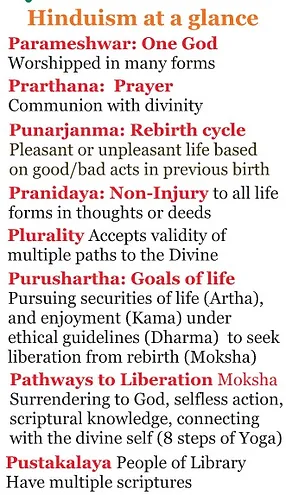
    Here are my 8Ps of Hinduism:

    ,P,arameshwar: One God. Hindus believe in one God who is worshipped in many forms. There is the freedom to choose a physical form (statue, object, drawing, plant, or animal), or no form based on your preference.

    ,P,rarthana: Prayer. Vocal or silent prayer which is the communion of Hindus with the Divinity.

    ,P,unarjanma: Rebirth cycle. Pleasant or unpleasant life experiences in the current life are based on the good/bad acts in the previous birth. This serves as an all-encompassing Divine justice system, with no ‘get out of jail Free- card’. This can be expounded with details on the karma concept, punishment mitigating actions, as and when time permits.

    ,P,ranidaya: Ahimsa – Non-injury to all life forms in thoughts or deeds.

    ,P,lurality: Acceptance of validity of multiple paths to the divine. Hindus have no issues with other religions and do not try to actively proselyte.

    ,P,urusharthas: Goals of life. Pursuing security of life (Artha – money, shelter, food, etc) and enjoyment (Kama– sensuous pleasure), but under ethical guidance (Dharma – righteous living) to seek liberation from the cycle of rebirth (Moksha).

    ,P,athways to liberation (Moksha): Surrendering to God (Bhakti Yoga), selfless action (Karma

    Yoga), gaining scriptural knowledge (Dnyana Yoga), connecting with the divine self (Raj Yoga- ashtanga yoga for some).

    ,P,ustakalaya: Hindus are people of the library and have multiple scriptures to guide us (some transcribed by seers and some authored by spiritually advanced humans). Many consider Bhagwad Gita as a convenient handbook for initial study.

    An additional P can be added which is ,P,rerana from Bharat, acknowledging India as the fountainhead of this profound philosophy.

    I hope these Ps act as pointers that will lead to an in-depth discussion and sharing thereby enabling greater understanding and friendship.

  • Forehead Dot

    Forehead Dot

    One of the major factors for a person’s satisfaction with life is the alignment between a person’s internal values and physical actions. Many times, people express their internal values verbally but due to external and internal constraints, their actions do not match their values. The conscious and subconscious awareness of this discrepancy results in a psychic imbalance and self-doubt. On an evolutionary basis, our brain is programmed to make decisions for performing actions that would increase the probability of our survival. Once the person’s survival is assured, further decisions are taken to obtain comforts and sensual pleasures. Early in evolution, our day-to-day decisions affected the possibility of surviving or dying on a near-constant basis. In most of the areas of the world, as civilization progressed most of our decisions are not that critical, except in areas of natural or man-made calamities. Our brain takes information from our surroundings through the five senses. This information is matched to patterns of previous experiences in form of self memories and shared knowledge (including learned prejudices) and the definitions of norms that have been established by the company we keep. Many times, the information conveyed by the sense organs is flawed. If we are driving on the interstate road on a hot humid summer day, we may see a large collection of water in the middle of the road. The eyes send that information to the brain. Fortunately, due to previous experiences and knowledge, wisdom takes over and the probability of a large body of water in the middle of the interstate is deemed to be not possible at that time. We ascribe this finding by the eyes to the phenomenon of mirage and continue to drive. Another more nuanced example is the thoughts that arise in our mind when a well-dressed good-looking person (based on the local standards) smiles at you in a public place versus an unattractive poorly dressed person of similar age, sex, and race doing the same action. On honest self-reflection, we will acknowledge that the thoughts are grossly different which I do not need to elaborate.

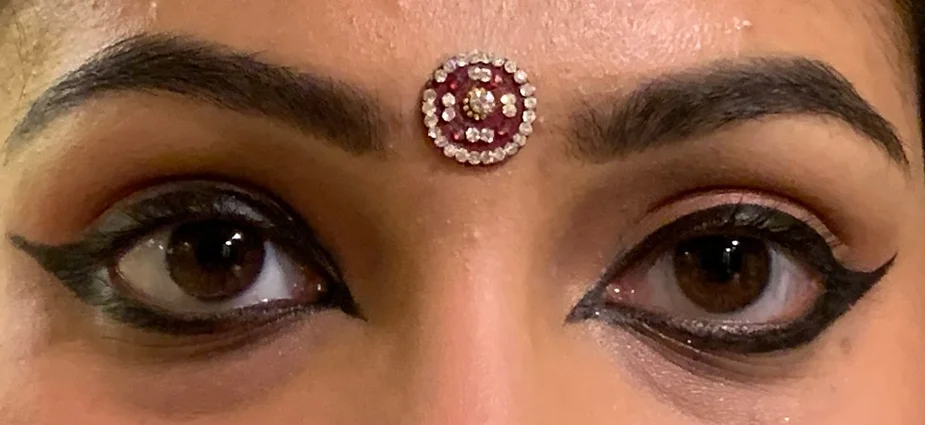
    The metaphorical third eye which when opened has the power to see clearly through the illusions seen by the physical two eyes. There is an incident in ancient history described in the epic Ramayan when Lakshman and Sita hear the demon Mareech who had transfigured into a golden deer, screaming in Lord Rama’s voice. Lakshman uses his third eye to see through this falsehood, which unfortunately Sita does not use, resulting in the subsequent unfortunate sequence of events for her. Many times our two physical eyes delude us into associating poverty, way of dressing, and physical stereotypes with negative characteristics. It is our third eye that helps us cross the abyss of otherness and recognize the shared divinity with other beings. When someone trips and falls on a pavement, the homeless panhandler to whom he gave a scornful eye a few minutes ago, maybe the first person to rush to help. The third eye of Shiva is described in Puranas (ancient allegorical Hindu scriptures) as having the power to burn anything it sees when it opens up. This burning is not the physical ignition, but the light cast by the faculty of wisdom on the illusion presented by the sensory organs. A popular story of how Shiva burns Kamadeva the deity of love, when Kamadeva disturbs Shiva’s meditation, in order to evoke the feelings of love in the ascetic Shiva for Parvati. Most of us who are involved in intense concentration activities like studying, artistic endeavors, or spiritual pursuit, can agree that sensory organs bring in information in the most inopportune moments which causes an interruption in our thought processes and drift our attention by disturbing thoughts. By using different meditation techniques such as observing breathing, counting numbers, and chanting a mantra, we try to override the input from the sensory organs. These techniques are our third eye in action. The process of applying a bindi by women and tilak by men is a daily reminder that we possess this third eye which we should use to master the input to our brain from

    the sensory organs. This can be as mundane as controlling the desire to walk to the kitchen when the aroma of food permeates our nose, if we are on a calorie-restricted regimen, ignoring the text messages from our friends when we are studying for our school work, or the desire we feel when an attractive person of opposite sex walks in our visual field. This also includes the thoughts which arise in our minds when external events cause happy or painful thoughts in our minds. The third eye will also help in achieving a state of equanimity. Achievement of this state is a constant struggle with a very steep upward slope.

    Next time you see somebody applying the forehead dot, realize that that person is on a quest to master his or her own senses. Based on our situation we may not be able to apply physical bindi or tilak. But the physical action of applying an invisible pressure to the point between your eyebrows would be a great reminder. I pray to the divine that our third eye is open as much as possible and burn the distractions that try to steer us away from our goal of realizing our true nature.

    Please note that I sincerely apologize to others who have other great explanations for the reason to apply been the bindi or tilak. These thoughts are my own, based on the teachings of various wise persons. I do not disagree or contravene with other valid explanations.

  • Hindu Dharma in Nutshell

    Hindu Dharma in Nutshell

    In our daily life, many of us interact with a Hindu in one way or another. Either your doctor, a coworker, a classmate, a close friend, a neighbor, a teacher, a business owner, or even a spouse. Some of us have witnessed a caricature of a Hindu in a TV serial or a cartoon. If you have ever wondered what the Hindu faith is, or you are curious to know more about your fellow Hindu Americans, Here is a subtle glimpse.

    Let me ask you a question. What do we all want? We all want to be happy. All our endeavors are in that direction. We seek material goods, pleasant experiences, power over others, suitable mates, and many other things which give us fleeting moments of happiness. But is it possible to have everlasting happiness? The ancient Hindu sages meditated on this question and came to this answer. Yes, it is possible. We can be permanently happy by discovering our true divine nature. How do we do that?

    Hindus believe that the entire creation is made of pure consciousness. Our true nature is pure consciousness. Unfortunately, we have forgotten our true nature. The entire purpose of Hinduism is to get back to our original selves and be permanently happy in our divine state.

    • The first step is to base our life on an ethical foundation which is called Dharma. To live ethically, there are a few qualities that are described in the Hindu scriptures. The main ones are Ahimsa, which is non-injury, Satya which is truth, and Brahmacharya which is a disciplined life of nonindulgence. These are not commandments but are nuanced guidelines. The guidelines are context-based. Our Dharma depends on our social situation. Dharma for a policeman will be different than that of a teacher. In the same person, the Dharma today is not the same as the Dharma tomorrow. It is different depending on our role at that moment. Our Dharma as a child is different than our dharma as a husband or as a parent. It is different when we are working at our job. Dharmic living is doing our duty at the present moment, thereby pouring our heart out every time we do something, all the time and without attachment. There are lots of Hindu scriptures that help us decide what is ethical in a given situation. Dharma is the internal nature of everything. On a more profound scale Dharma is what sustains everything, including us individually, our family, our community, our country, our earth as well as the cosmos. Dharma has a much more nuanced definition which the actual exhibition will illustrate.
    • The second step is Sewa which is selfless service. Also called karma yoga. For many of us, yoga equates to a contortion of body parts into postures. This aspect of yoga is just a small portion of the concept of yoga. The word yoga means union. It is the union of ourselves with our divine nature. Karma yoga is the action that unites us with our divine nature. We should do our duty because it is the right thing to do and not be result-oriented. Do everything as if it is an offering to the Divine. Hinduism understands that the path of connecting with divinity is difficult and has lots of steps. It needs mastery over oneself. It takes a long time which can span this life but also may need multiple lifetimes. In each life, you reach a particular point. In the next life, you begin where you left, and move forward or backward based on your action (karma) in the past birth. Everyone will get there at the end. How long it takes will depend on your actions. What you do now affects the future either in this life or in the next life. There is accountability and consequence for everything you do. The flip side is that I accept what happens to me, hence I am able to accept sorrows and calamities. What I do and how I deal with my calamities affect my future. This way we accept what is happening to us and do our best to handle it.
    • The third step is the choice of three spiritual paths. Hinduism is recognizing that all people are different so there are different paths suited for different people based on their different temperaments.

    · The first path is called Raj yoga. In this path, there are eight steps of which the first two deal with practicing ethical restrains, and ethical observations. The next three are physical postures and breathing exercises as well as control of senses., The rest of the steps deal with meditation. This path requires consistent practice and great discipline.

    · The second path is Dnyana yoga which is the study of scriptures. Hindus have a massive library of scriptures describing the different paths. This path is intellectually strenuous, and a seeker needs a subtle mind to grasp the concepts.

    · The third path is Bhakti yoga, which is the path of Devotion. Essentially, we rest our minds and hearts in God. Anybody can do that as there are no prerequisites.

    This raises the question, Which or what God? In Hinduism, there are varieties of ways in which divinity or God is conceptualized

    1) The first concept is pure consciousness which is described by the symbol pronounced as Om. Pure consciousness had no attribute and is infinite. For many people, this is a difficult concept to wrap their minds around it.

    2) The second concept is Ishwara which is divinity with attributes. The all-knowing, all-powerful all-controlling supreme being. This has no physical form, and our mind is open to the abstract.

    3) The third concept is the Divine in a personal form. People can connect much more easily to a personal form. With forms comes a personality and a story. If you know a story you felt intimate with that form. You develop a close personal connection with that particular form of God. This tangible form is called a murti. This is represented by statues, photos, and physical symbols or objects. The mind stays easily focused on the physical form away from distractions. Although there are many physical forms of God, there is only one supreme being. Hindus worship one supreme being who can appear in many forms. We can use whichever form of divinity that the divinity chooses to manifest itself.

    Choose any of these paths. Take part of this and part of that. Mix and match. Let’s find the divinity within ourselves and recognize it in the whole creation. Let us be happy.

  • A Yogathon for All

    A Yogathon for All

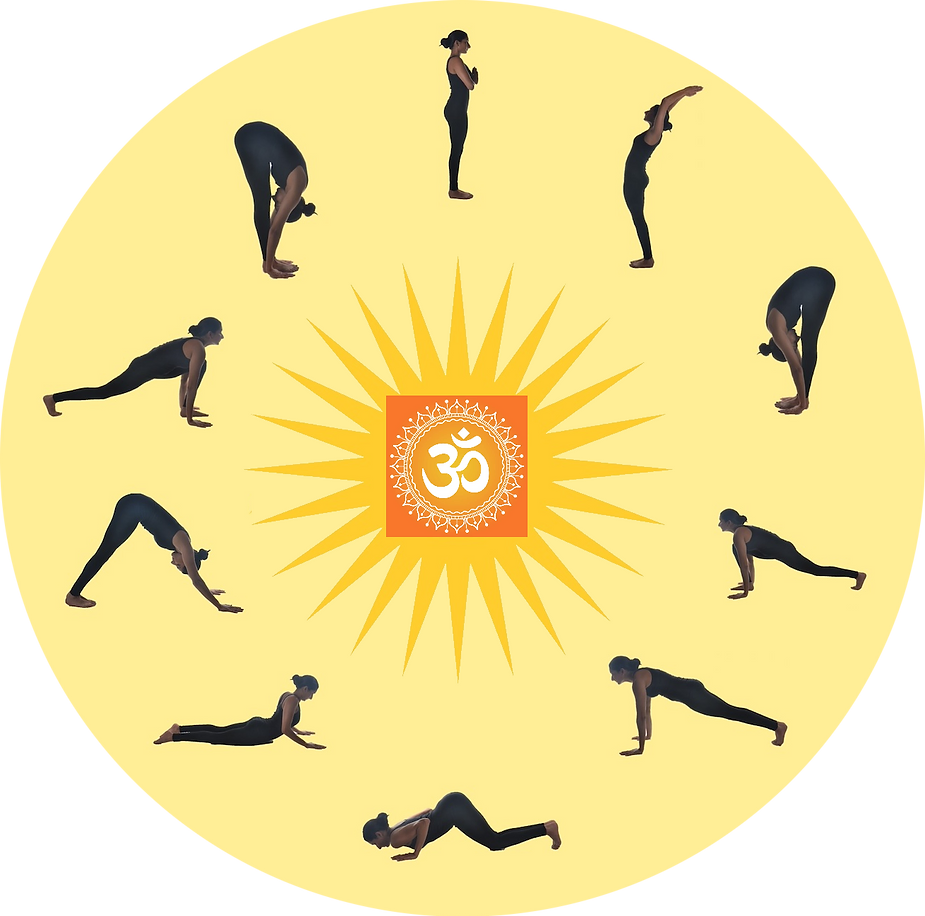
    My introduction to Surya Namaskar was at a very early age. Every morning I used to wake up hearing sounds of students reciting the thirteen names of the Sun on the primary school playground opposite my house, as they performed a series of yoga postures in a rhythmic fashion to the beats of a bass drum. My grandmother insisted that I learn to do the same sequence correctly and memorize the thirteen names of the Sun describing its various attributes. Over time, the simple sequence of yoga postures had become part of my regular morning routine. I was pleasantly surprised when in 2007, Hindu Swayamsevak Sangh (HSS) launched the Surya Namaskar Yagna (sun salutation offering yogathon) campaign to raise awareness of this effective but simple exercise sequence, for the benefit of the general masses, and correct the misperception of yoga in America being somewhat of an elitist activity.

    Every year, the period of fifteen days, starting from the auspicious day of Makar Sankranti (January 14th), when the sun enters the Sagittarius constellation, and ending on Ratha Saptami, the 7th day after the new moon, is selected for a concentrated effort to maximize the outreach and share the benefits of the regular practice of Surya Namaskar to the American masses. Community organizations, general places of gathering, places of employment, schools, and colleges have been involved in this activity. To make the promotion more interesting and participatory, the number of Surya Namaskar performed by individuals is maintained using a user-friendly SNY app. This year, 12,676 individuals logged a total of 728,795 Surya Namaskars into the SNY app. The project reached 34 schools with 3,004 students and teachers participating.

    A cursory search on the internet will unearth an extensive treasure trove of research on the benefit of Surya Namaskar for interested individuals, including benefits on the entire neuro glandular and neuromuscular systems of the body and the entire psychosomatic human constitution. An interesting perspective was given to me by a friend who said that given the paucity of time available for a busy individual like him, performing Surya Namaskar was an all-rounded efficient exercise that stretched and toned all the major muscle groups of the body, burned calories, and added a spiritual side to exercise. Performing Surya Namaskar daily in the morning, along with your spouse and children, also brings the entire family together at the start of the day, at least for a short duration of time.

    I was asked by a colleague whether Surya Namaskar was a religious activity. I explained that Surya Namaskar was a humanistic activity. Offering namaskar (which is more than just a simple salutation) to the sun was an expression of gratitude to the divine. In every religious tradition, the sense of Gratitude is looked upon as a very positive mental state. The term ‘Yagna’ in the name of the Surya Namaskar campaign also has a deep meaning. Yagna means sacrifice or offering. Instead of the exercise being a self-centered activity for our own betterment, performing Surya Namaskar with a mental state of offering it to the divine, in the form of the Sun, transforms it into a spiritual activity. The well-balanced movements, with an ordered breathing sequence facing the rising sun (whenever possible), contrast with my other exercise routines that are performed in the gym while staring at my own reflection or a television screen.

    Last few years, my wife taught Surya Namaskar at an underserved school in my hometown of Peoria before the interruption of the COVID epidemic. Every week different classes performed the yoga routine, followed by a spiritual breathing exercise called Pranayam. One beauty of Surya Namaskar was that it only requires small space of 3 feet by 6 feet, without the use of any equipment. The children at the school were greatly enthusiastic, and an anecdotal report suggested that many have continued the practice. This has been repeated over multiple years, which interestingly would be the first and possibly the only exposure of these children to the benefits of yoga. In the future, when the children grow up to be adults, they will have fond memories of Surya Namaskar and will continue to learn and practice it.

    My younger daughter’s high school JROTC (Junior Reserve Officer Training Corps) physical training team also performed Surya Namaskar as a warm-up routine at competitions, even after she graduated from the program. As the cadets stood in a long line, performing the series of movements and counting in unison, while other teams watched in curiosity, there was a sense of unity that energized the team and prepared them for the competition to come.

    This year, Health for Humanity Yogathon has been acknowledged by numerous elected representatives and has received 129 proclamations from American mayors, governors, US Congresspersons, and United States Senators. It was also recognized as a part of Congressional records in 2017. Acknowledging the benefit to the American community from this campaign, the ‘Let’s Move’ initiative of the then First Lady Michelle Obama declared HSS as a partner in 2012.

    Whether Surya Namaskar is used as a family activity, health initiative in underserved areas, or a warm-up for a sport, there are undoubtedly significant physical, mental, and spiritual benefits to the exercise, and we must share it for the benefit of society. The slogan yoga for health, health for humanity is aptly put in practice by the Surya Namaskar Yagna. I am sure Surya Namaskar will be a regular routine and one of the prime jewels offered as a gift by the ancient Hindu culture to the rest of humanity.

  • Memories of Rashtriya Swayamsevak Sangh (RSS) shakha during my formative years in India

    Memories of Rashtriya Swayamsevak Sangh (RSS) shakha during my formative years in India

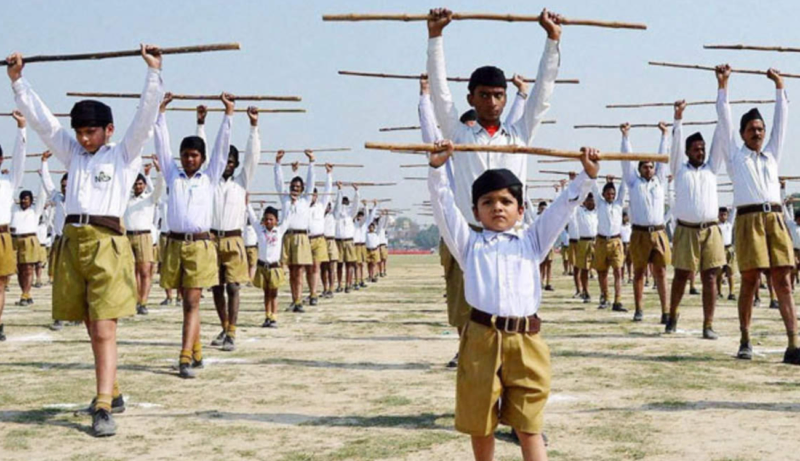
    I vividly remember the time in my childhood when at an age of 10–12 years, my friends and I used to play cricket after school, in the space around my building in the suburb of Mumbai called Mulund East. A bunch of us barefoot kids running around in the limited space with an old cricket bat, a rubber ball, and instead of wooden stumps, chalk drawn stumps on the wall. At about 5:45 PM Mr. Sudhakar Kale, one of our neighbors who we affectionately called ‘kaka’ (Kale pronounced as Kaa-Ley, kaka is uncle), used to round us up and take us to a playground of the neighborhood school for something he called RSS (short form-Sangh) shakha (daily gathering of youth and adult RSS cadets- RSS cadets are only males. Women have a parallel but separate organization also called Rashtriya Sevika Samiti Short form Samiti). The first stop, however, was in the slums along the way where in one of the shanty houses was stored the flagpole which was a 6–7 ft, half inch diameter aluminum pipe, a wrought iron tripod for the pole, and the saffron colored bifurcated silken Hindu flag in a silken bag. All the boys wanted to carry them, and so we used to argue as to who carried the items yesterday, and whose turn it was to do it today. Kaka taught us the proper protocol for conducting the gathering, with proper intonation of vocalizing the commands. After reciting some scriptures and verses describing our ancient culture and great heroes, performing yoga and sun salutations, we finally got to do the activity for which we had all come. GAMES. The games were traditional Indian games, as well as many innovative games which could all be played without any equipment. The games inculcated physical strength, team building, leadership skills, as well as principle of taking everybody together so that even the weakest person was not left behind and was everybody’s responsibility. The playing of the games cut across any barriers that may have been in the minds of kids from affluent households and the slum dwellers. All the kids hollered patriotic slogans and played with great fervor. Some days even adults joined the games. The stratification of superior and inferior based on so many factors in the outside world was demolished or at least suspended during the games. Each of the boys learnt to tell stories from the books we borrowed from kaka and sang patriotic songs. The Shakha lasted for exactly one hour and ended with the prayer to Mother India. The last slogan was Bharat Mata ki Jai — Victory to Mother India.

    As few months passed, we got familiarized to the routine and each boy got to lead conducting some of the games, leading the scripture recital, leading the ending prayer. After a year or so when the boy became familiar with the running of the shakha, a boy was selected to lead the whole shakha every day. That boy was called Mukhya shikshak (lead teacher). My memory as a Mukhya shikshak was a day when few local dignitaries were visiting our shakha and socializing in small groups in the periphery of the playing kids. As the time for ending came, I give the command for everyone to form lines. All the dignitaries immediately stopped talking and promptly joined the different lines. I was amazed that the local dignitaries who were very influential and affluent people would listen the command given by a 13-year-old boy and promptly fell in line. Their discipline and shakha upbringing were manifest and the respect they showed to my role, etched in my brain that day.

    My lifelong sense of responsibility and sense of duty was molded in those early teen age years. In the monsoon season, the attendance in open air Shakha fell, sometimes to zero, since the parents feared that we could catch cold if we got wet playing in the rain, and the wet playground was unfit to play. However, the guiding principle was that the Shakha should go on every day come rain or sunshine. I seriously took this message to heart and regardless of weather, every day I would take the flag, the flagpole and tripod to the playground, hoist the flag under the shelter of a tiny overhang of the building roof, say the prayer, bring the flag down and return it to the place of storage. This sense of discipline, and adherence to performing my duty inculcated during my formative years have helped me during my higher education as well as throughout my career as an adult. Another learning from that time was toughness towards minor discomfort. During storytelling, we were told story of hero Karna when he was a student of Sage Parashuram. The old sage had taken a nap using Karna’s thigh as a pillow. At that time an insect started biting and digging into Karna’s thigh. But he did not move his leg to not to disturb the sleep of his guru. The guru woke up when his head got soaked with the blood from Karna’s thigh. During the ending prayers we all stood in position of attention with the greatest stillness. During the prayer there were lots of mosquitoes on the playground who used to feast on our hands and legs, as we used to wear shorts and half sleeve shirts. But the protocol was not to move during the prayer. The boys used to discuss that if Karna did not move when the insect was boring a hole in his thigh, we should resist the urge to scratch the itch. After the prayer we would break into frenzy of scratching.

    I always remembered the attention and respect to the uniform. Most of the kids who came to shakha were from extremely poor families. Due to rough and tumble games and overall rough usage the uniform would often get torn. But the discipline was never to wear tattered uniform. The boys learned to sew, so that they could repair the tears by themselves without waiting for their mothers, prior to coming to shakha.

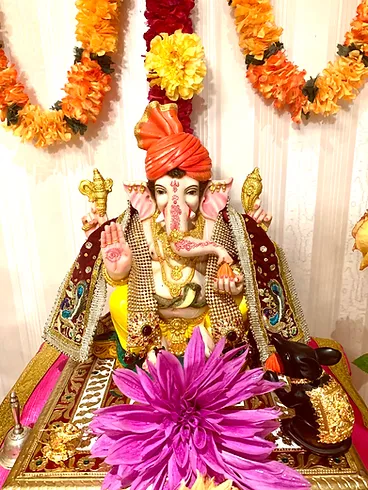
    An issue on which Hindus are often maligned is caste-based discrimination. This discrimination is illegal in India, and has decreased in major parts of the country. My view on this topic is based on what I experienced as a child. In the months before the Ganpati puja festival, the local Sanghachalak (regional president) of our area, used to invite boys of few shakhas in my town to his house, where he used to teach us how to memorize and recite a scripture called Ganpati Atharvashirsha. Every day he would make us repeat the complicated Sanskrit scripture again and again patiently correcting us till we achieved the clarity of pronunciation and intonation identical to him, who was a very orthodox brahmin with secular as well as religious education. He was a wealthy real estate developer by profession. As I have described previously most of the shakha attending boys were from the very low socioeconomic class, living in the slums and spoke a language which was crude. But after his training of two to three months all of us learnt to recite the scripture like Sanskrit scholars. During the Ganpati puja our group of 8 to 10 boys (those who persisted through the rigorous training) were invited to the houses of all the local RSS functionaries, most or all in those days in my area were Brahmins, every evening where we sat cross legged in their living room in front of the Ganpati alter and recited the scripture. After recitation the hosts used to give us a glass of milk with fruits and other holy offerings., as well as a dakshina (traditional token fee to priest) of ₹1.25. Afterwards they also touched our feet to express reverence. We used to get excited by thinking of cricket equipment we could buy from pooling our money. As I grew older, I realized the significance of the so-called high caste brahmin family heads bowing in front of the kids from so called lower castes and social economic strata, because at that moment we were performing the actions of brahmins priests. Our Karma (action) elevated us, then and there- not in the next life or even distant future. That phenomenon caused a greatest impact on my psyche more than any stories by social reformers or lectures of great orators.

    The RSS uniform pants in my youth were an unusual looking khaki short which derisively called as Khaki knicker. People used to make fun of RSS workers and their khaki knickers which on the other hand was held in great reverence by us and as an object of pride. I am sure that at an age when teenage boys are very sensitive to their appearance, a shakha attending boy who had the fortitude to wear that khaki knicker despite teasing by other boys and snickering from neighborhood girls, that boy in future can withstand any peer pressure and firmly take a principled yet unpopular stand in his life.

    On some days neighborhood boys whose parents disapproved of our RSS as well as and the boys who did not like the discipline in the shakha would sit on the parapet around the playground and make rude comments. Kale kaka told us to ignore them although I had an urge and capability to thrash them. However, when the games used to start, those boys wanted to come and join the games. We used to tell them that they could play the games only if they attend the whole shakha. Over time many relented, joined and grew up to be dedicated cadres.

    Our teacher Sudhakar Kale was my neighbor, living on the same floor of my building. Whenever somebody in the building had a leaky faucet, broken toilet flush or other minor repairs, they would either borrow his tools or request him to help and repair. He immediately helped without expecting or getting any compensation, not even a cup of tea. However, the biggest impact on me was when someone died in the building, he was the person who made arrangement for the funeral. In India we do not have formal funeral homes and the family must take care of the ritual for the deceased person’s body with the help of the seniors in the family who hopefully had knowledge of the process. However, the family members are usually rendered helpless by grief, and other relatives may be travelling from far. Kale kaka would be the first person to arrive and essentially organize this extremely sensitive ritual giving support to the grieving family. Although as a child I must have not realized it’s significance, my remembrance as an adult, indicates that it must have impacted my mind at that time. Unfortunately, this special person passed away from lung cancer at a relatively early age.

    I remember a day when I was visiting Kale kaka’s home to pick up copy of a book. We heard strains of a patriotic song coming from the neighboring building. One of the boys in that building was singing in his house a patriotic song at the top of his voice. Usually, he used to sing bawdy Bollywood songs, but attending shakha changed his repertoire to include patriotic songs. Kaka just smiled. I was beside myself laughing.

    Besides important life lessons, I also learned skills like how to cross the railway tracks picking my bicycle with one arm and stabilizing the front wheel so that I could safely cross without tripping, carrying a small note book to jot down notes, contacts and to do lists (days before cell-phones), and picking trash from our playground everyday blown over from neighborhood buildings or dumped by unscrupulous passersby without complaining.

    I sincerely believe that attending RSS shakha in those formative years has helped my personal life, family life and professional career as well as aided me to become a socially conscious member of the American society.

    Featured image photo from from American Kahani

  • The evening of life (Vanaprasth-ashram)

    The evening of life (Vanaprasth-ashram)

    Late in the afternoon of life, as the shadows start getting longer, the mind starts contemplating the approaching evening of our life. Nowadays, due to the miracles of medicine, a healthy lifestyle, and a generous helping of good luck, our evenings are many times stretched long. This late afternoon-evening of life is the stage of life which the Hinduism calls Vanaprasth-ashram, the third stage of life.

    The first stage of life is living as a student and is called Brahmacharya-ashrama. The second householder stage, Gruhasta-ashram, describes being married with a family and being a sustainer of the society. The third stage is Vanaprasth-ashram, mentioned previously, where our children have hopefully settled and we have retired/retracted from active management of our household, profession, and material ambitions. Finally, for special people who devote themselves to seeking spiritual knowledge and abandoning material pursuits, irrespective of age, there is Sanyasa-ashram.

    I am currently transitioning into the Vanaprasth-ashram stage. Vanaprasth-ashram, in ancient times, literally meant handing over the household to your children and going outside (Vana = forest/garden, Prasth = to go). Going outside could be figurative or literal. Forest-living meant joining either a commune in the forest under the guidance of a spiritual teacher or going on a pilgrimage with no plan to return. In modern days, however, a retirement community is an option. Essentially, Vanaprasth-ashram is getting out of the hair of the descendants and seeking spiritual pursuits.

    All of us want to transit into the vanaprastha-ashram on our own terms, with careful preparation and deliberate, masterful strides. We do not want to be dragged, screaming, and protesting by the merciless time. We have spent our entire childhood and young adulthood deliberately, or accidentally, preparing for adulthood through studying, learning occupational skills, gaining societal behavior skills, and playing games in order to have the best possible adult life. Similarly, in our adult life we should dedicate a portion of our time to preparing for our retirement age, which for many of us may be quite long.

    In preparing for retirement, I read innumerable articles on a successful retirement. Many of these dealt with various financial aspects, including investing, smart spending, taxes, and charitable giving. There were other articles suggesting that I take up a part-time job for a social company or pursue intellectual stimulation. Some articles suggested picking up a new hobby or restarting an old hobby that had to be abandoned previously. These aspects are very well covered in many articles and websites.

    However, none of these sources included the most foundational preparation for retirement that is described by the Hindu word Vyragya, which roughly translates to non-attachment. This means not forming new material attachments (things and people), decreasing previous attachments (detachment), and letting go of ego, feelings of superiority or inferiority, revenge, fear, paranoia, and things that are beyond human control. This internal mental reset is a gradual process. We do not need to immediately leave our domicile and get rid of our possessions. We just have to start being constantly aware of the transitory (non-permanent) nature of people and things and be ready to surrender them at the appropriate time, including our life. Non-attachment also does not mean ‘not caring.’ In contrast, successful non-attachment involves unlimited caring. Instead of caring for just your family, friends, etc., your care circle increases drastically to include the entire creation. In this non-attached state, you put your best effort without any attachment to results.

    The practice of non-attachment is a gradual upwards staircase, with each step slippery and sloping upwards. Climbing is difficult, but it is possible by practicing the ability to enjoy without attachment those very things that were previously enjoyed with attachment.

    This means evolving from an inward-facing (self-centered) life to an outward-facing (universe-centered) life and outlook. This outward-facing lifestyle is best facilitated by getting involved in service activities. Not just a sporadic volunteer hour but actual, meaningful involvement in the entire process of the service project. Developing a service-centered mindset by participating in service projects, even when you are working, makes the transition to larger participation later in life easier. Performing service without any expectation of living or even posthumous gains is the true practice of non-attachment.

    By practicing non-attachment to our best possible ability, and also being present as a home safe haven if our own or others need us, our own evening will stay brightly lit for ourselves and the people around us, who may be starting their day in the earlier hours. Being a Hindu, I also know that successful non-attachment will make my next morning (rebirth) better.

    Featured image Photo by Derek Torsani on Unsplash

  • A Very Brief History of Hindus in United States

    A Very Brief History of Hindus in United States

    Many immigrant Hindus including me have stood outside US consulates in India hoping for the approval of their student Visa and consider it a heart-wrenching experience. After I started graduate school in the US, my life drastically changed. Instead of living in an upper-middle-class family household with servants in Mumbai, I was scavenging used furniture from student housing dumpsters, selecting kitchenware from donated items in church basements, and transporting secondhand mattresses to my apartment from the donation place by carrying it on top of our heads with three other friends. This was my introduction to the American Dream. However, this was a tremendous improvement compared to my cultural ancestors who came to the United States before me.

    Beginning in the 17th century, Indians were brought to the American colonies as servants by members of the East India Company. There were also some East Indian slaves in the United States during the American colonial era. The Naturalization Act of 1790 made Asians ineligible for citizenship, and the associated rights.

    In 1913, the Alien Land Act of California prevented non-citizens from owning land. However, Asian immigrants got around the system by having their Anglo friends or their U.S.-born children legally own the land that they worked on. But since Hindus were not permitted to bring women from India, procreation within the culture was not possible. In some states, laws even made it illegal for Indian men to marry white women. However, it was legal for “brown” races to mix. Hence, many Indian men married Hispanic women.

    All the discrimination ultimately culminated into large-scale violence. On Wednesday, September 4, 1907, a mob of more than 500 white men attacked the 250 Hindu (predominantly Sikh) lumber mill workers in Bellingham, Washington. As you know, occasional individual violence sadly persists to date.

    The contribution of expatriate Hindus in America towards India’s freedom struggle is immense but not well-known, neither in India nor in the US. Great revolutionaries like Vishnu Ganesh Pingle, Kartar Singh Sarabha, and many other Hindus who returned to the US tried to incite revolt among the Indian troops of the British Army, as well as start an armed revolution. They learned to shoot guns and manufacture explosive devices in the US. Their Ghadir Party, initially called the Pacific Coast Hindustan Association, was formed on July 15th, 1913, in San Francisco to support India’s freedom struggle. Many such heroes sacrificed their young lives in this struggle.

    On the educational front, Anandibai Joshi is believed to be the first Hindu woman to set foot on American soil, arriving in New York in June of 1883 at the age of 19. She graduated with an M.D. from the Women’s Medical College of Pennsylvania on March 11, 1886. This tradition continues with American Universities now (2021) having 24,813 Indians at the undergraduate level, 90,333 in graduate programs, and 2,238 in non-degree courses.

    One of the first major discussions of Hinduism in the United States was Swami Vivekananda’s (B.A. in Fine Arts) address to the World’s Parliament of Religions in Chicago in 1893. In 1902 Swami Rama Tirtha (Master’s Degree in Mathematics) visited the US for about two years lecturing on the philosophy of Vedanta. In 1920 Paramahansa Yogananda (B.A. in Arts) came and settled in the US. These great philosophic geniuses had a secular education in addition to their mastery of the Hindu ancient wisdom, which made them effective communicators to western audiences. On June 4, 2013, Satguru Bodhinatha Veylanswami became the first Hindu monk and only the third Hindu in history to deliver the opening prayer before the US House of Representatives. I was fortunate to be a witness to that historic event in the visitors’ gallery on that day.

    The Vedanta Society was responsible for building the earliest temples in 1905 in San Francisco, but they were not considered formal temples. The earliest traditional Mandir (temple) in the United States is Shiva Murugan Temple in Concord, California, also known as Palanisamy Temple, and was built in 1957.

    In the political arena, the first Hindu Sikh Congressman Dalip Singh Saund was elected in 1955. We now have two Congressmen who are declared Hindus, and multiple politicians including the current Vice President raised in a Hindu household.

    Finally, the Immigration and Nationality Services (INS) Act of 1965 signed by Lyndon Johnson was passed. This opened the doors to Hindu immigrants who wished to work and start families in the United States. One of those, yours truly, arrived in Cedar Rapids, Iowa via JFK Airport New York on August 3rd, 1993 with an Indian medical degree, $500 in hard currency, and bright starry eyes at the age of 23 years. Today there are approximately four million Hindu Americans who make up 1.2% of the U.S. population. Their impact is felt when you step into a doctor’s clinic/hospital, enter an engineering department of any top-ranked University, stay in a motel, or buy a Dunkin’ Donuts coffee. What you may not know is the slowly increasing number of Hindus in the armed forces, including my son, increasing charitable contribution in innumerable local communities, as well as the massive amount of volunteering and charitable contribution of Hindus in response to the Covid crisis.

    In 2016 the Diwali forever stamp was launched by USPS to commemorate the joyous Hindu festival of Deepavali celebrating the victory of good over evil.

    The philosophy of opportunity and the generous hearts of Americans has allowed Hindus to contribute to their betterment and the betterment of all Americans as well as lead a life according to the eternal Hindu principle of Vasudhaiva Kutumbakam — the whole creation is a family.